

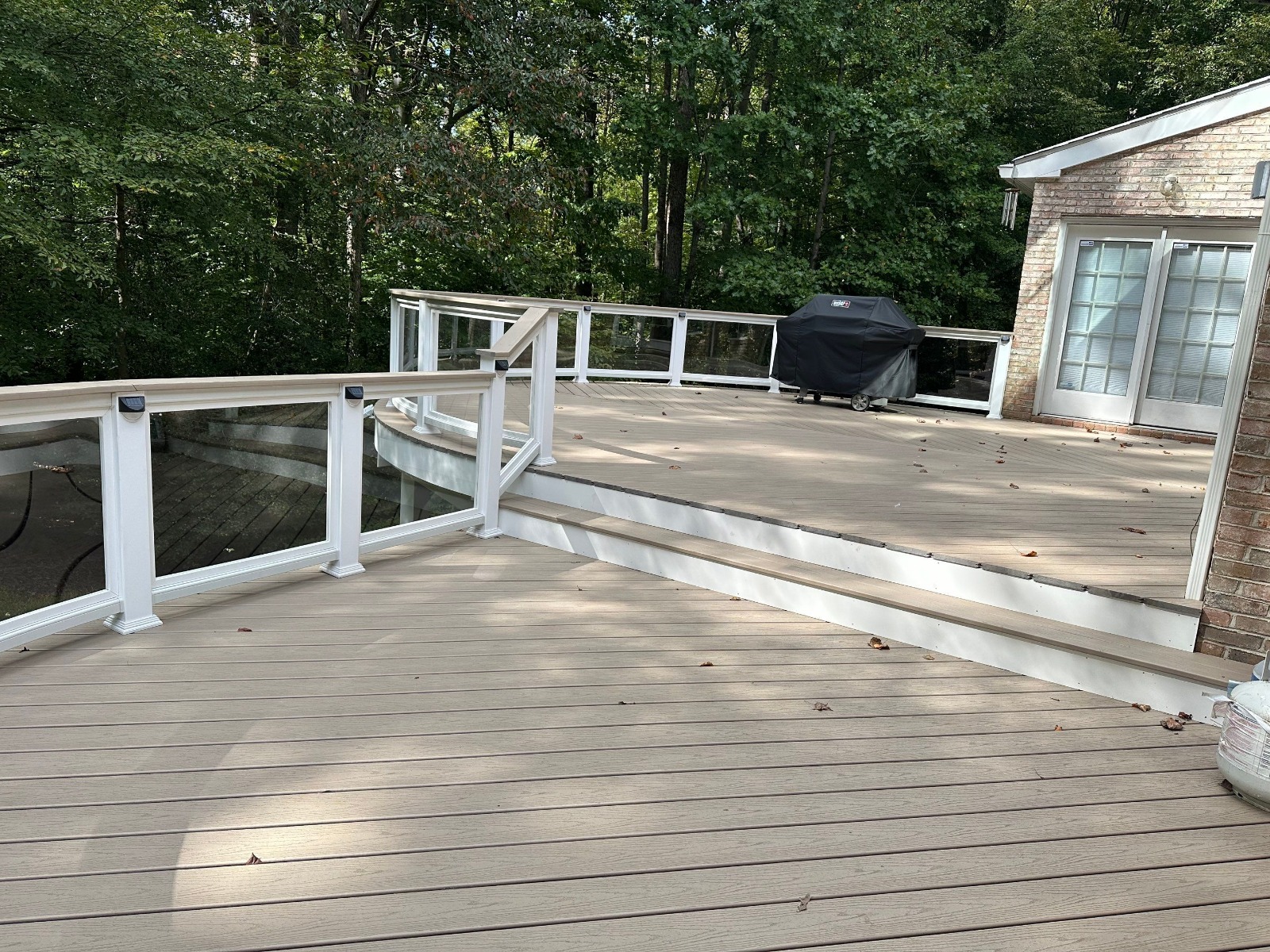
Structural Damage Assessment & Initial Conditions
The property sustained significant exterior damage caused by a fallen tree, impacting decks, railings, and surrounding structural elements. The force of the impact resulted in collapsed sections, broken materials, and unsafe conditions around the affected area.
Debris, damaged wood framing, and displaced components required immediate assessment to determine the extent of structural compromise and to plan safe removal procedures.
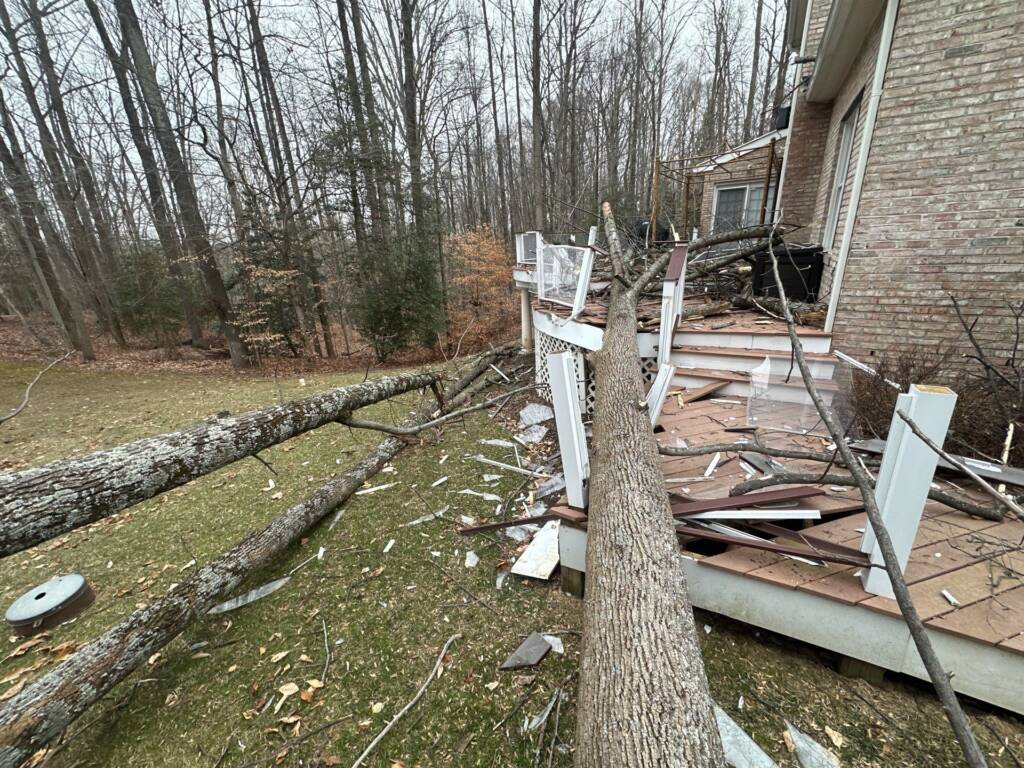
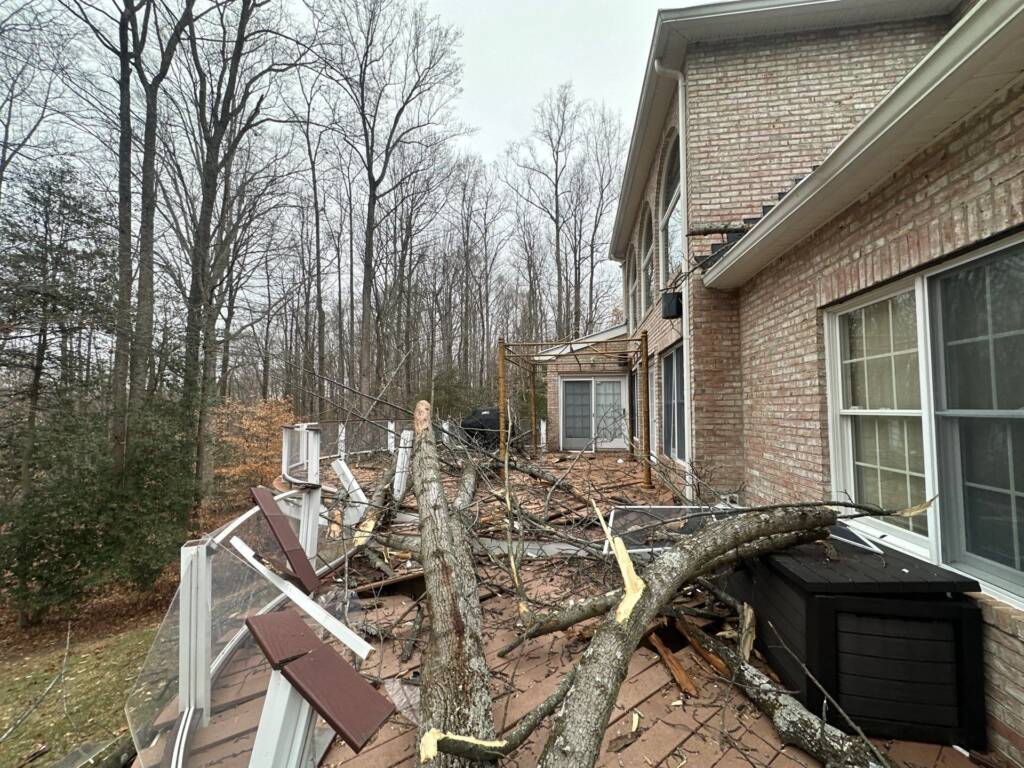
This initial stage focused on evaluating the damage, securing the area, and preparing the site for controlled demolition and reconstruction.
The affected exterior areas showed compromised load-bearing elements and disrupted access points. A detailed inspection was necessary to identify structural risks and establish a clear scope for restoration.
Early evaluation ensured that subsequent work could be executed safely and efficiently.
Design Phase
The design phase centered on redefining the damaged exterior structures with improved stability and updated construction methods. Layout adjustments were considered to enhance durability and prevent future vulnerabilities.
Design decisions focused on safety, structural integrity, and long-term performance.
Construction Phase
Construction planning included debris removal, structural demolition, and preparation for rebuilding damaged sections. Each step was carefully coordinated to ensure safe execution and accurate reconstruction.
This phase marked the transition from damage assessment to active restoration.
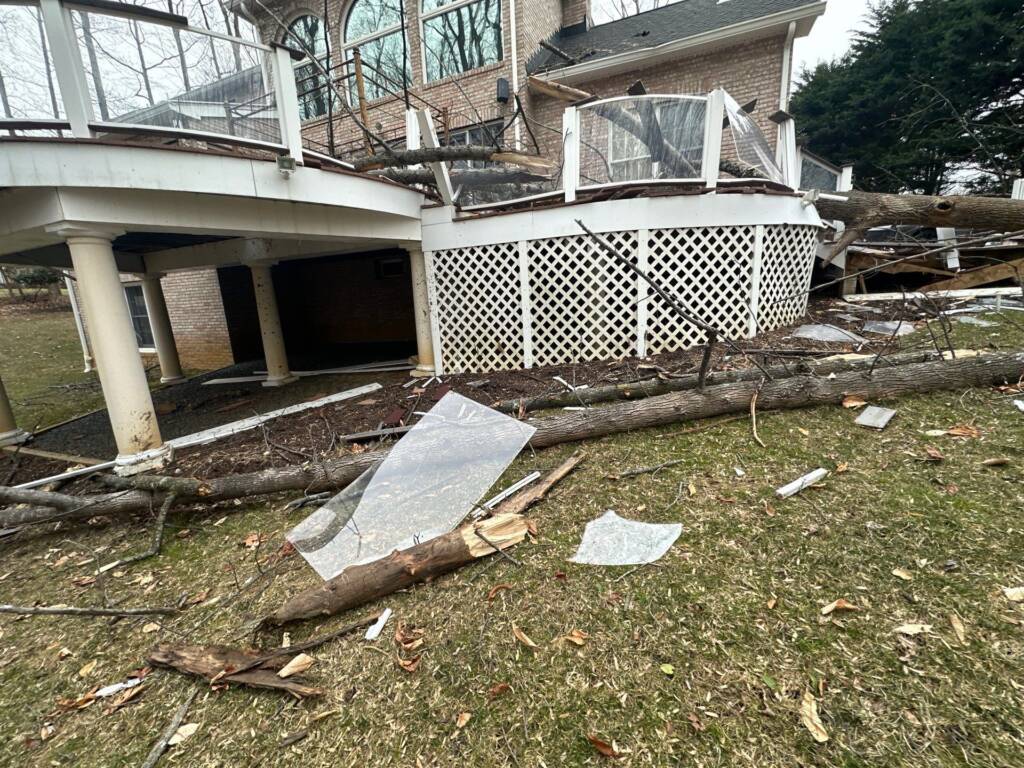
Outdoor Hardscape Installation & Structural Reconstruction
Following the damage assessment and debris removal, reconstruction began with the installation of new structural framing to restore the exterior platform and support systems. Load-bearing beams and joists were carefully positioned to ensure proper alignment and stability.
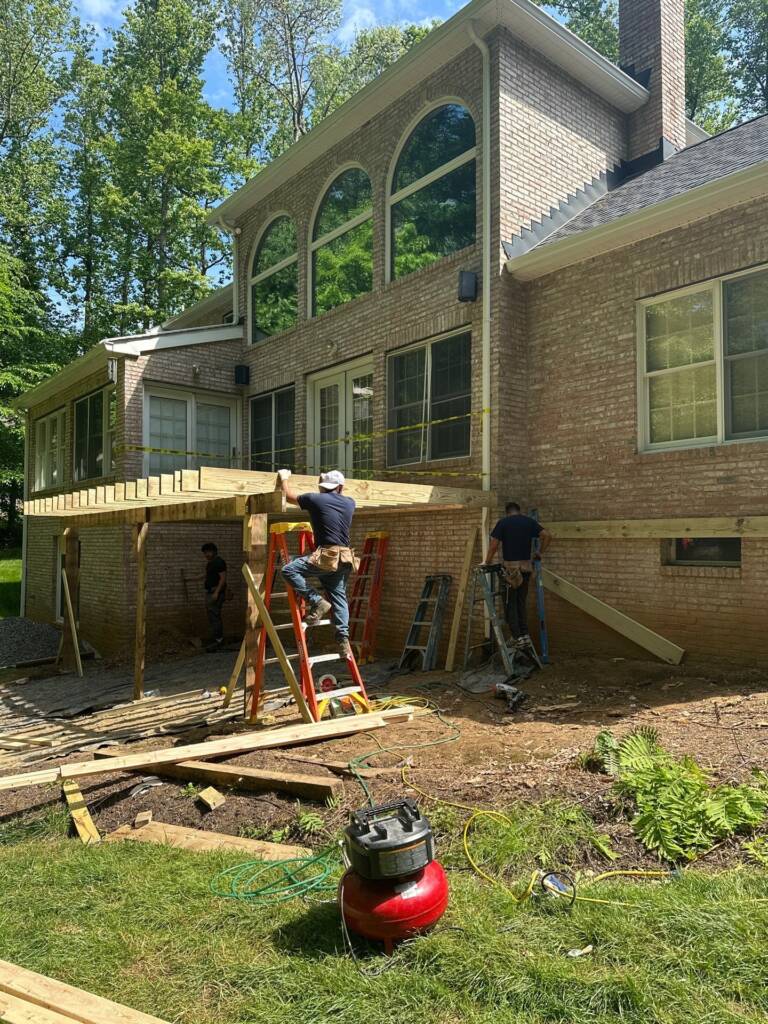
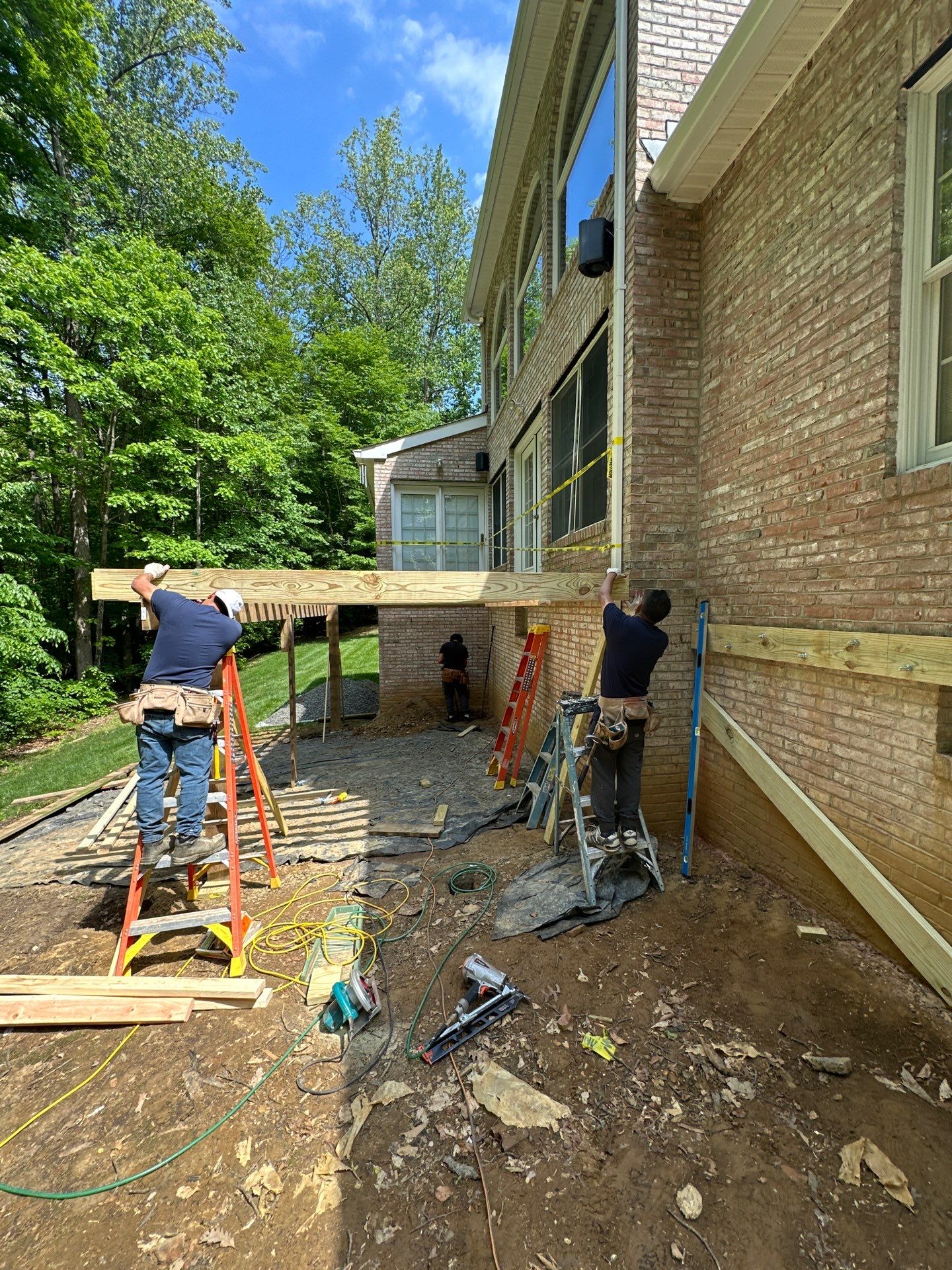
Temporary supports and leveling systems were used to maintain accuracy during installation. The structure was rebuilt to meet safety requirements and provide a solid base for subsequent decking and finishing work.
This phase reestablished the integrity of the exterior structure while improving its overall durability.
Construction activities focused on precision and reinforcement, ensuring that all connections were securely fastened and properly anchored to the existing building. Ground preparation and access adjustments were made to support long-term performance.
This stage marked a critical step in transitioning from restoration to full exterior functionality.
Deck Surface Installation & Structural Support
This phase focused on the installation of the deck surface and elevated structural supports, transforming the framed structure into a defined outdoor platform. Oriented strand board panels were installed to create a stable, continuous surface in preparation for final decking materials.
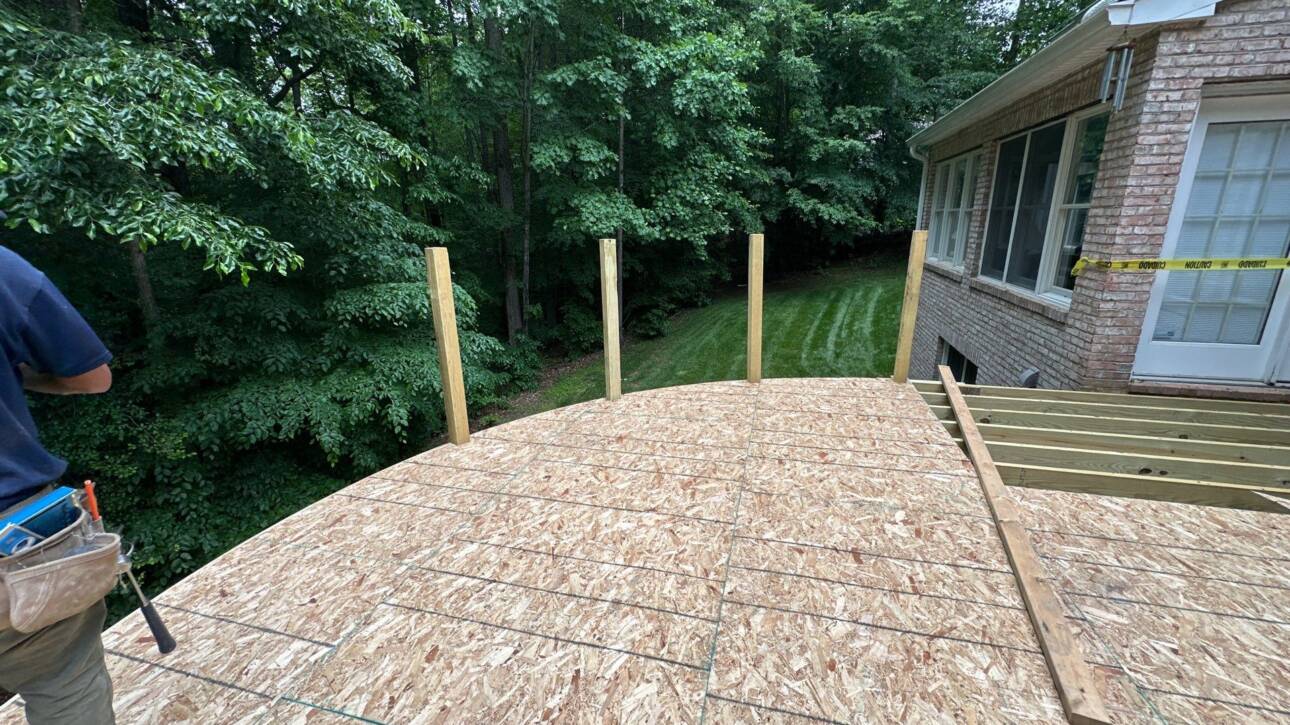
Support posts and beams beneath the structure were carefully aligned and reinforced to ensure proper load distribution. Elevation and spacing were verified to maintain structural integrity and long-term performance.
This stage established the functional footprint of the deck while ensuring durability and safety.
Additional adjustments were made to maintain consistent surface levels and clean edges. The structure was prepared for railing installation and final exterior finishes.
These improvements brought the exterior platform closer to full usability.
Design Phase
The design approach focused on defining the deck’s shape, elevation, and connection to the existing structure. Proportions were planned to maximize usable space while maintaining compatibility with the surrounding environment.
Design decisions prioritized stability, flow, and outdoor functionality.
Construction Phase
Construction included surface panel installation, structural reinforcement, and support alignment. All components were secured to meet safety standards and ensure long-term performance.
This phase completed the primary deck surface and supporting framework.
Underdeck Framing & Structural Reinforcement
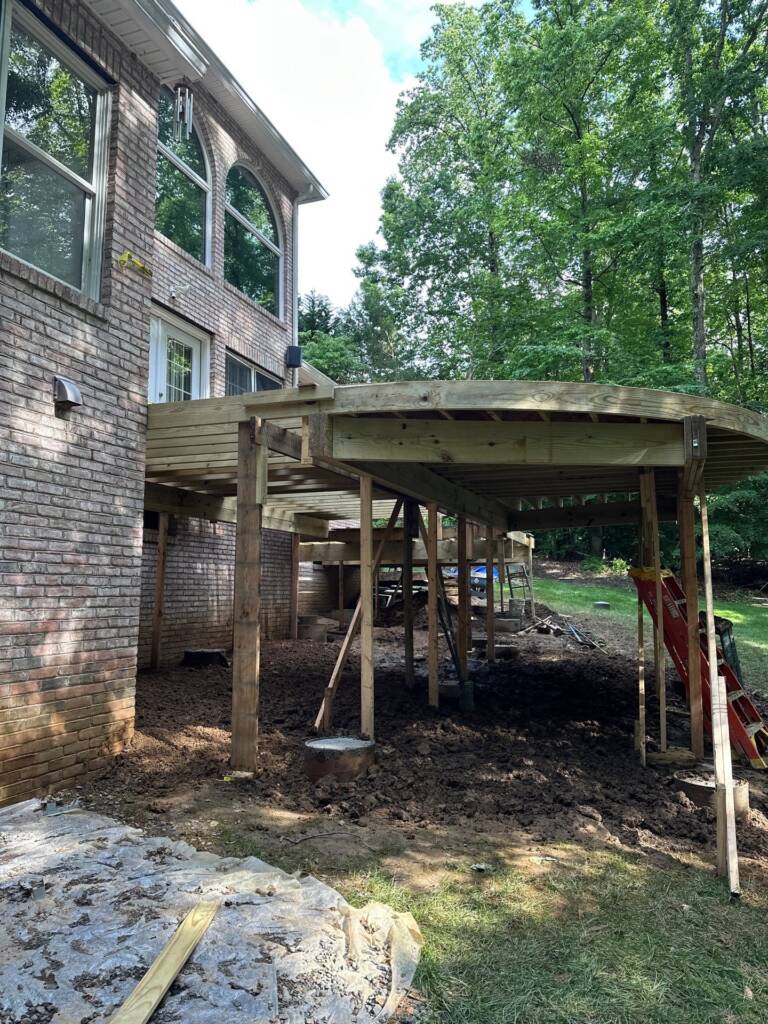
This stage focused on the installation of underdeck framing and structural reinforcement, providing essential support to the elevated platform above. Beams, joists, and diagonal bracing were installed to ensure stability and proper load distribution.
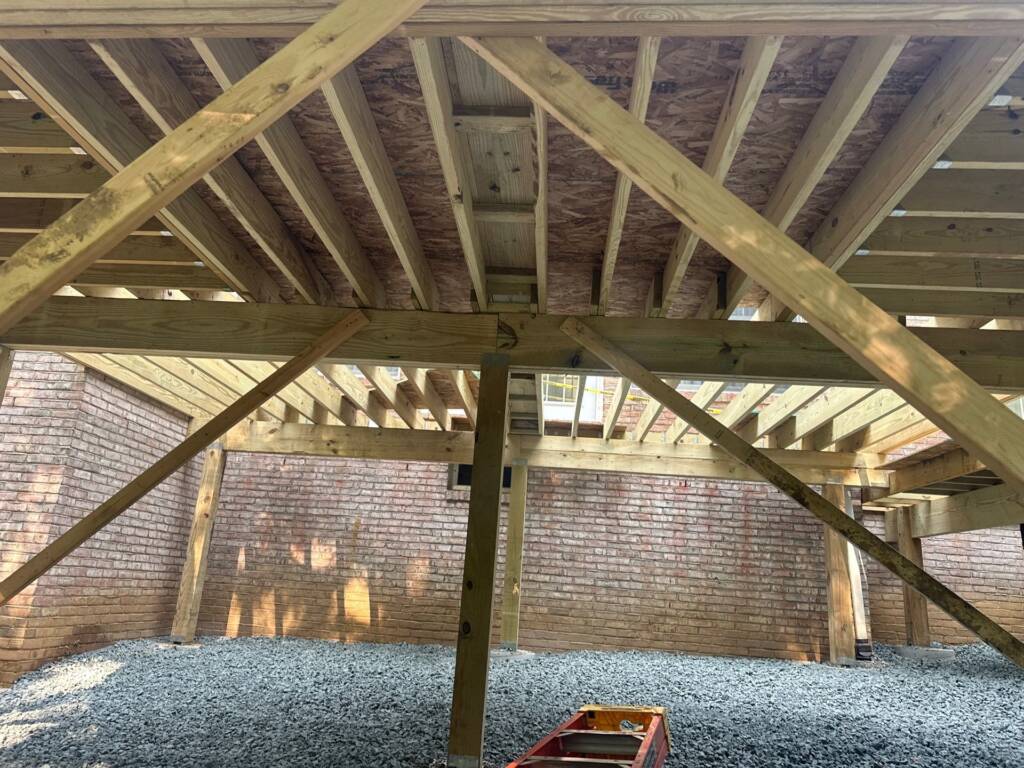
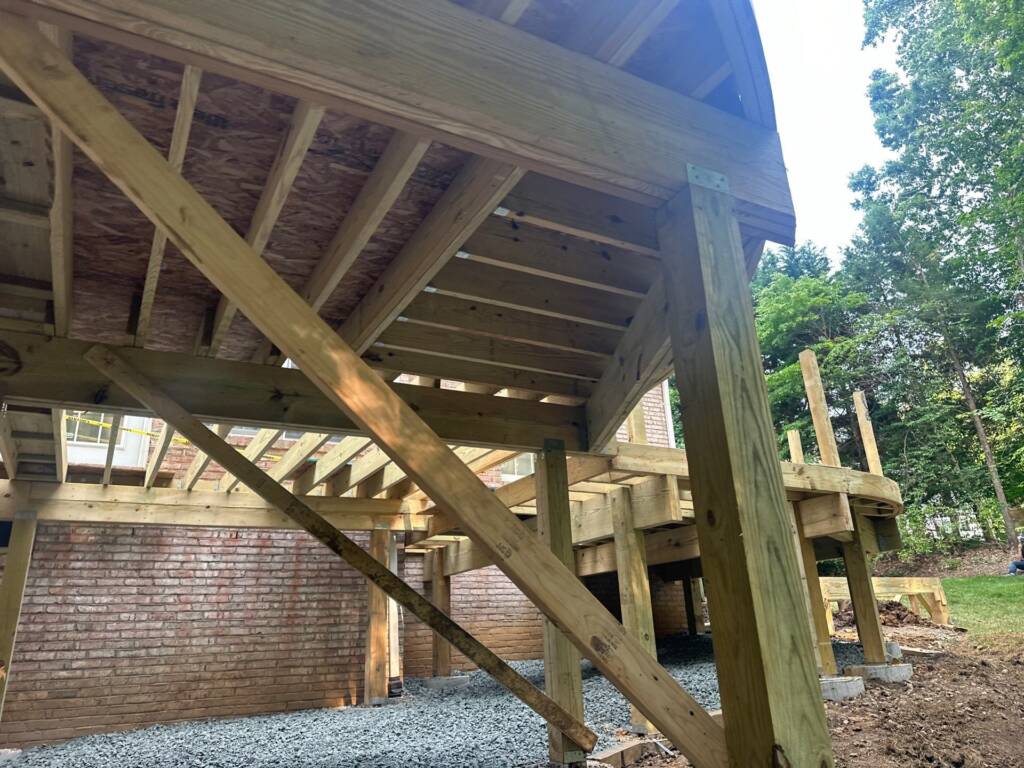
The structure beneath the deck was carefully aligned to maintain consistent spacing and elevation. Reinforcements were added to strengthen connections and improve overall structural performance.
This phase ensured the deck system could safely support long-term use and environmental loads.
Additional adjustments were made to improve ground clearance and prepare the area below for drainage and surface finishing. The completed framework established a solid structural foundation beneath the deck.
These improvements enhanced both safety and durability of the overall exterior structure.
Design Phase
The design approach emphasized structural integrity and efficient support placement. Beam layout and bracing positions were planned to maximize strength while maintaining accessibility below the deck.
Design decisions focused on load transfer and long-term performance.
Construction Phase
Construction included installation of beams, joists, support posts, and diagonal bracing. All components were secured and inspected to meet safety and structural standards.
This phase completed the primary underdeck support system.
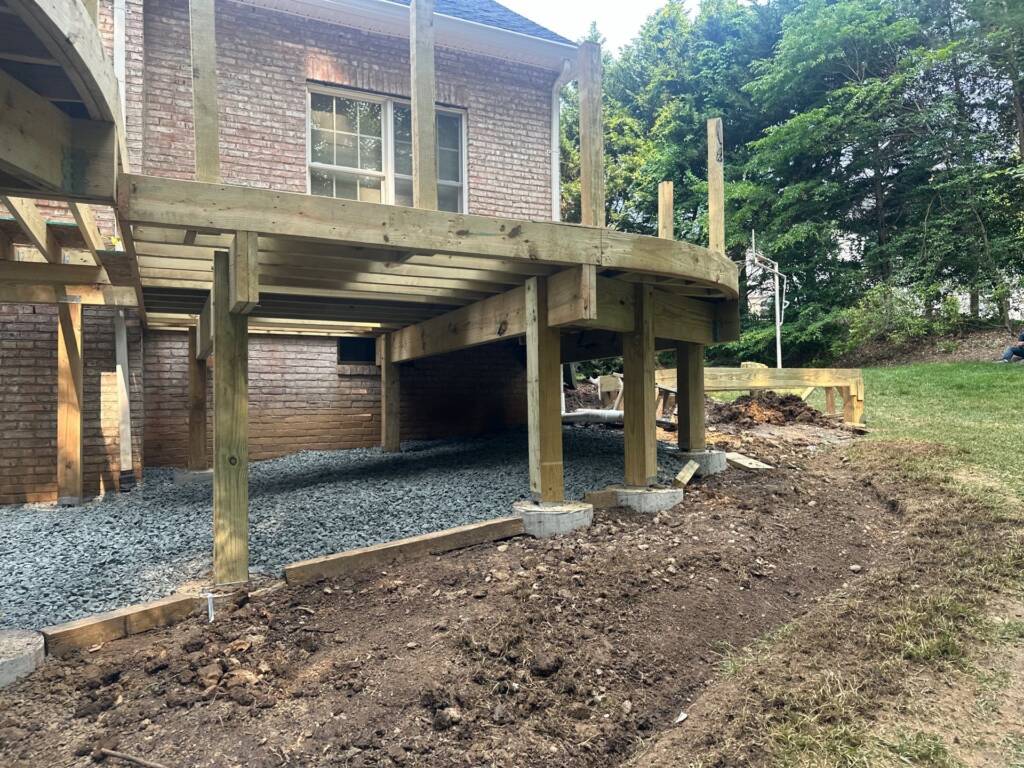
Deck Layout Alignment & Surface Preparation
This phase focused on aligning the deck layout and preparing the surface for final installation. Deck joists were exposed and adjusted to ensure consistent spacing, proper elevation, and accurate alignment across the entire platform.
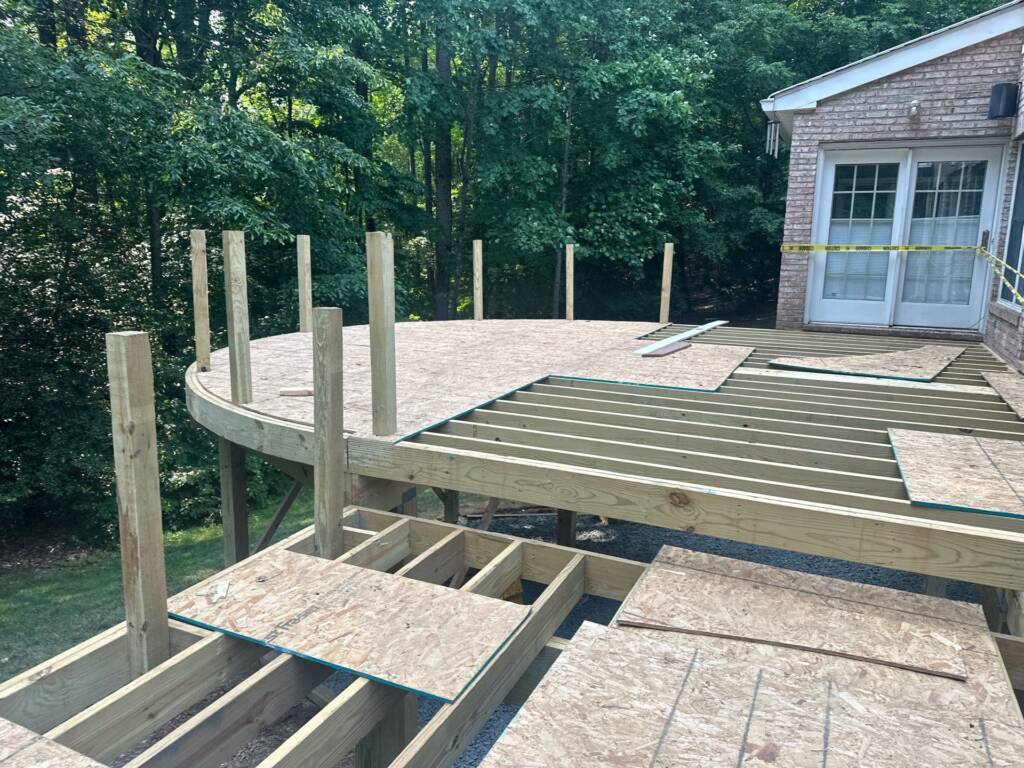
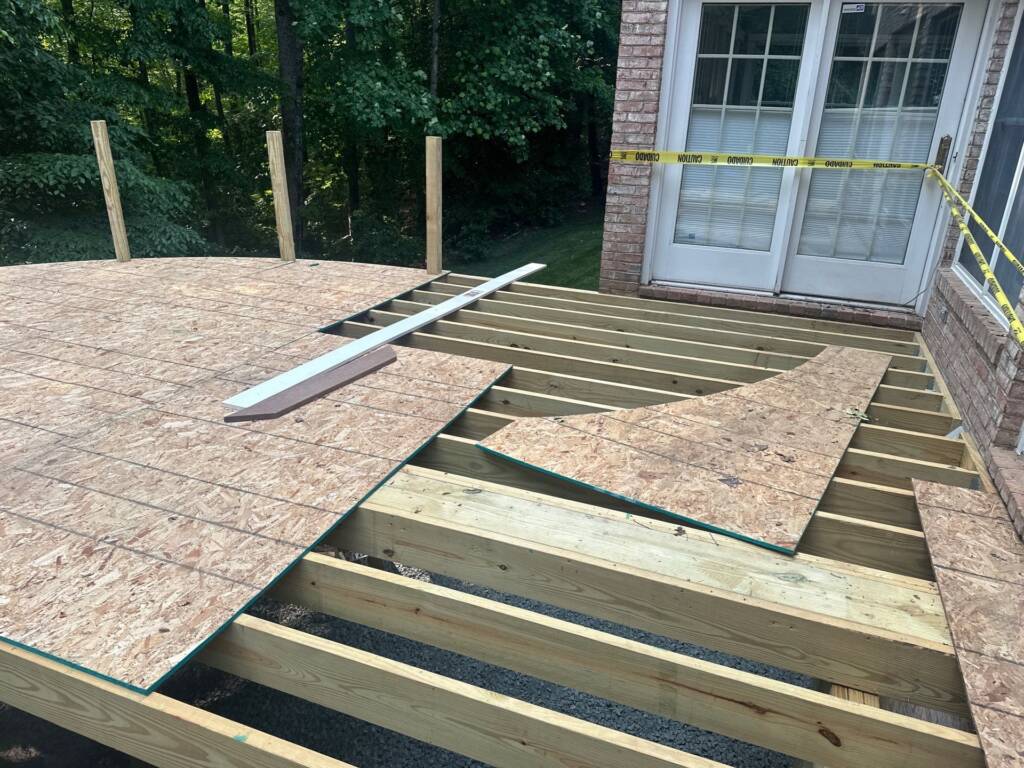
Temporary surface panels were placed to verify fit and layout before permanent installation. Measurements were carefully checked to maintain straight edges and smooth transitions around posts and access points.
This stage ensured the deck surface would be uniform, stable, and ready for finishing materials.
Additional adjustments were made to refine panel placement and confirm structural support beneath the surface. These steps helped prevent uneven sections and ensured long-term performance.
Surface preparation marked a critical step before final decking installation.
Design Phase
The design process focused on defining deck geometry, panel orientation, and spacing. Layout decisions were made to optimize flow and maintain visual consistency across the platform.
Design considerations emphasized accuracy and efficient material use.
Construction Phase
Construction included panel fitting, alignment corrections, and surface preparation. All elements were positioned to support a smooth and durable final deck surface.
This phase finalized the deck layout in preparation for completion.
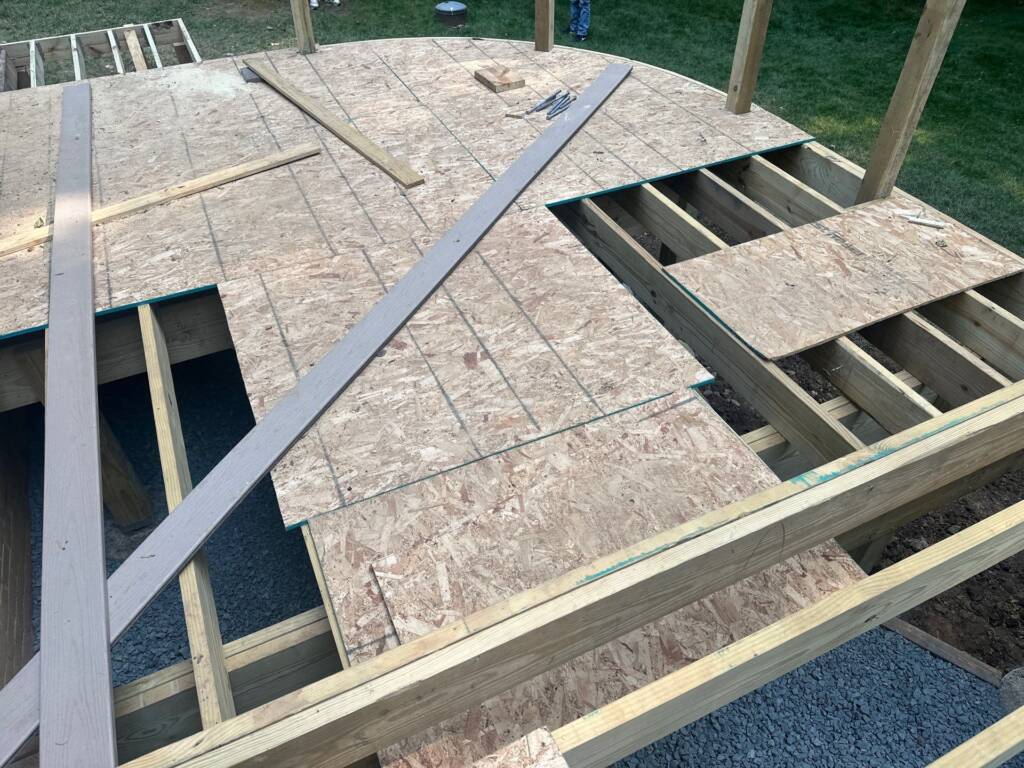
Deck Surface Installation & Edge Definition
This phase focused on the installation of the final deck surface, completing the platform with uniform decking boards and defined edges. Boards were carefully placed to ensure consistent spacing, clean alignment, and smooth transitions around the structure.
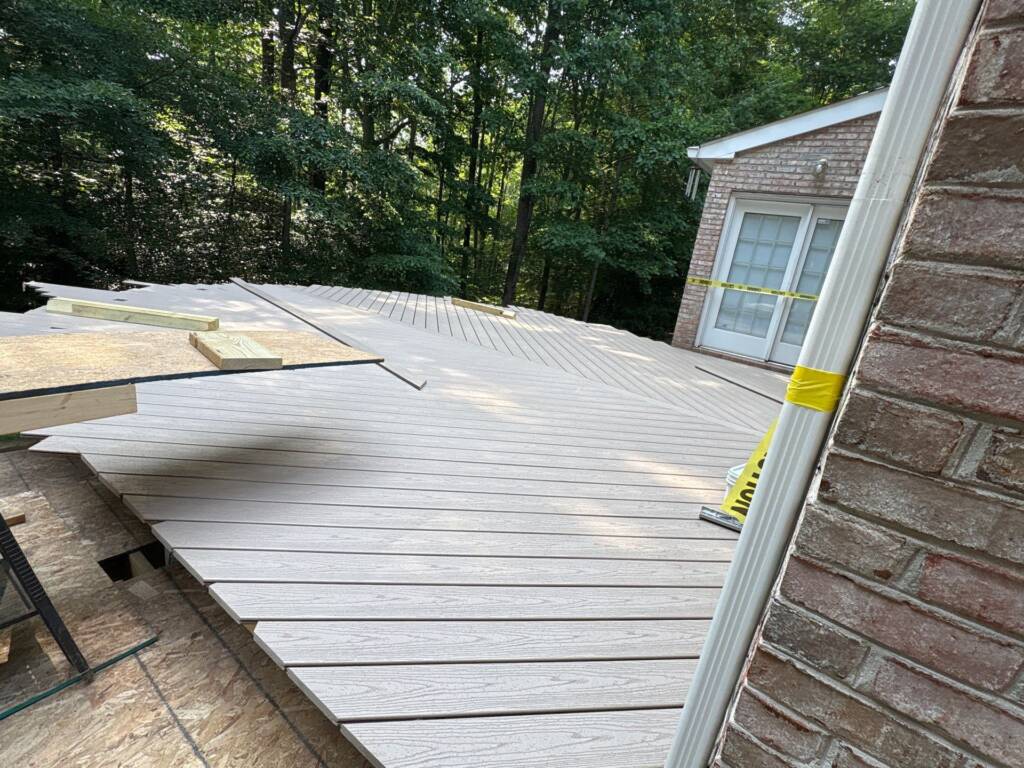
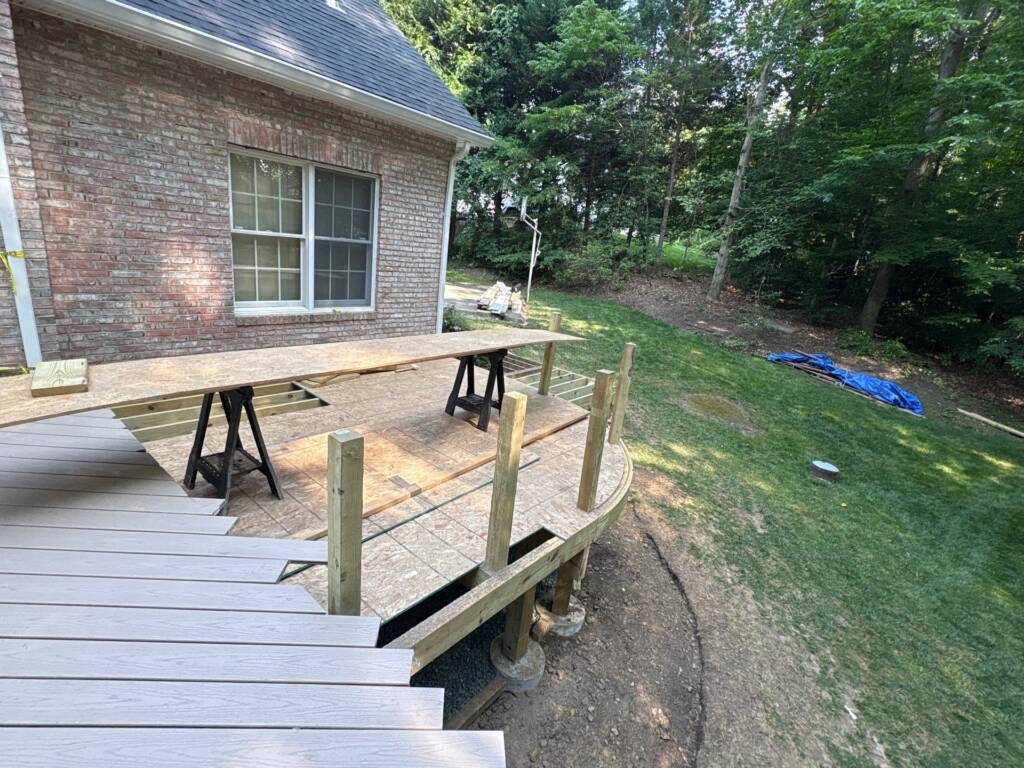
Special attention was given to the deck perimeter, where curved and angled sections were refined to match the layout and surrounding landscape. Temporary supports were used during installation to maintain level surfaces and accurate positioning.
This stage transformed the structure into a clearly defined and functional outdoor living area.
Additional adjustments were made to refine board alignment and prepare attachment points for railings and finishing elements. The deck surface was stabilized to ensure long-term durability and everyday usability.
These steps marked a significant visual and functional milestone in the project.
Design Phase
The design approach emphasized clean lines, smooth edges, and a natural flow that complements the existing structure. Board orientation and edge detailing were planned to enhance visual continuity and maximize usable space.
Design decisions focused on aesthetics, comfort, and outdoor functionality.
Construction Phase
Construction included decking board installation, edge detailing, and surface leveling. All components were secured to meet safety standards and ensure long-term performance.
This phase completed the primary deck surface in preparation for final exterior elements.
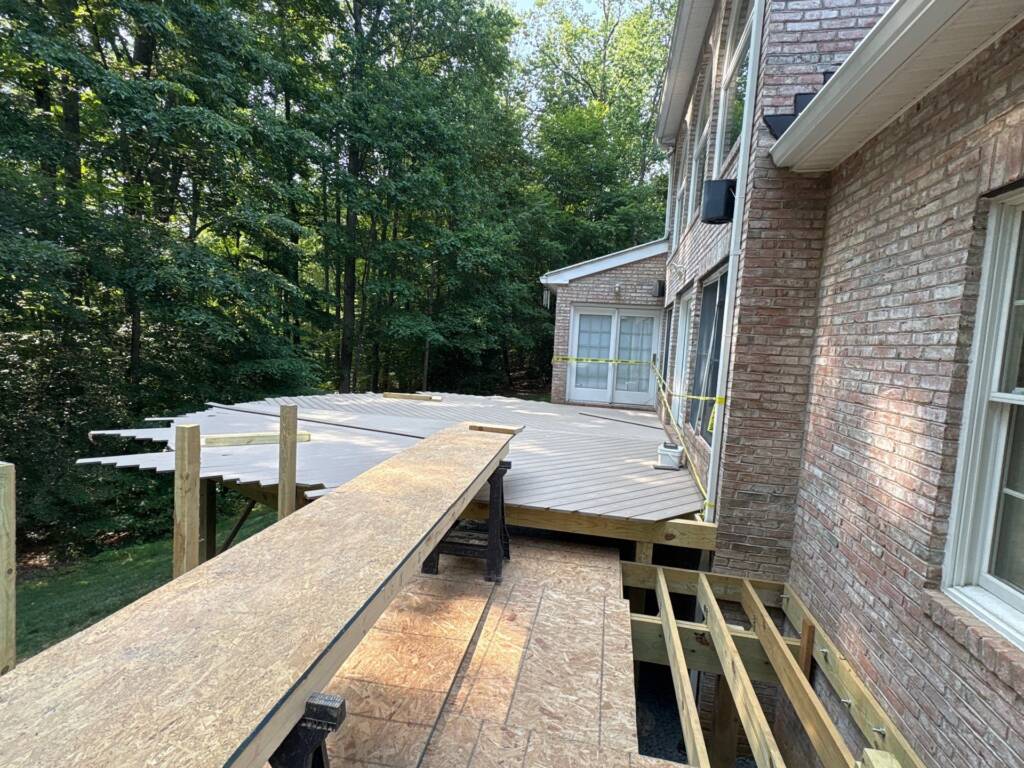
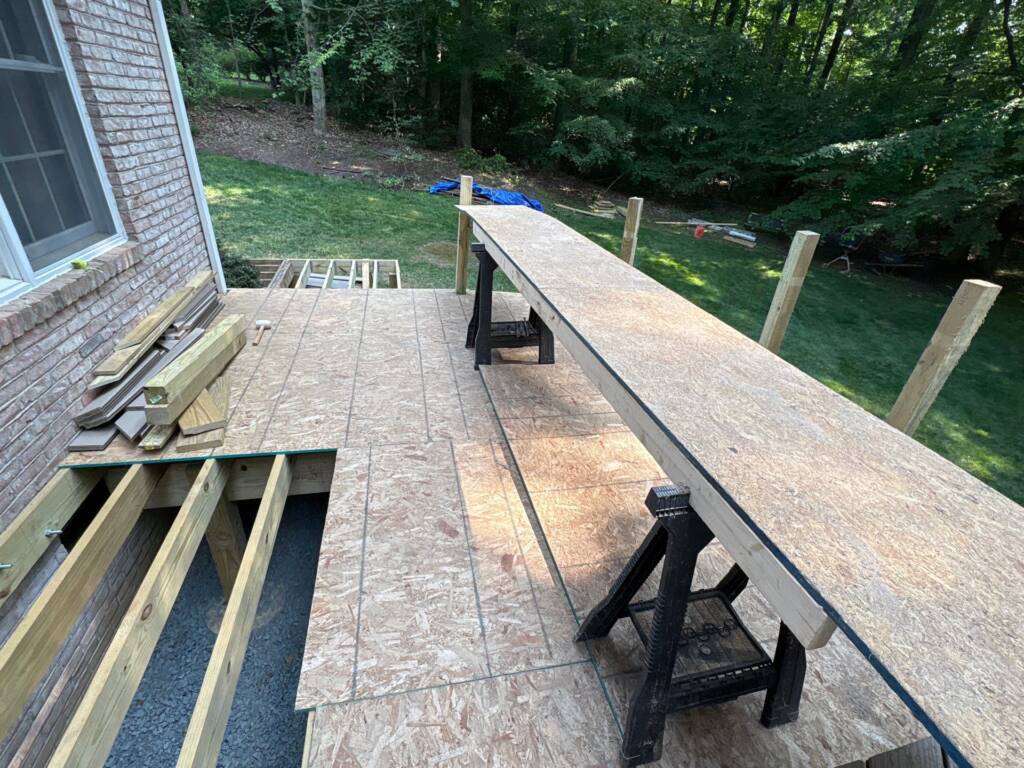
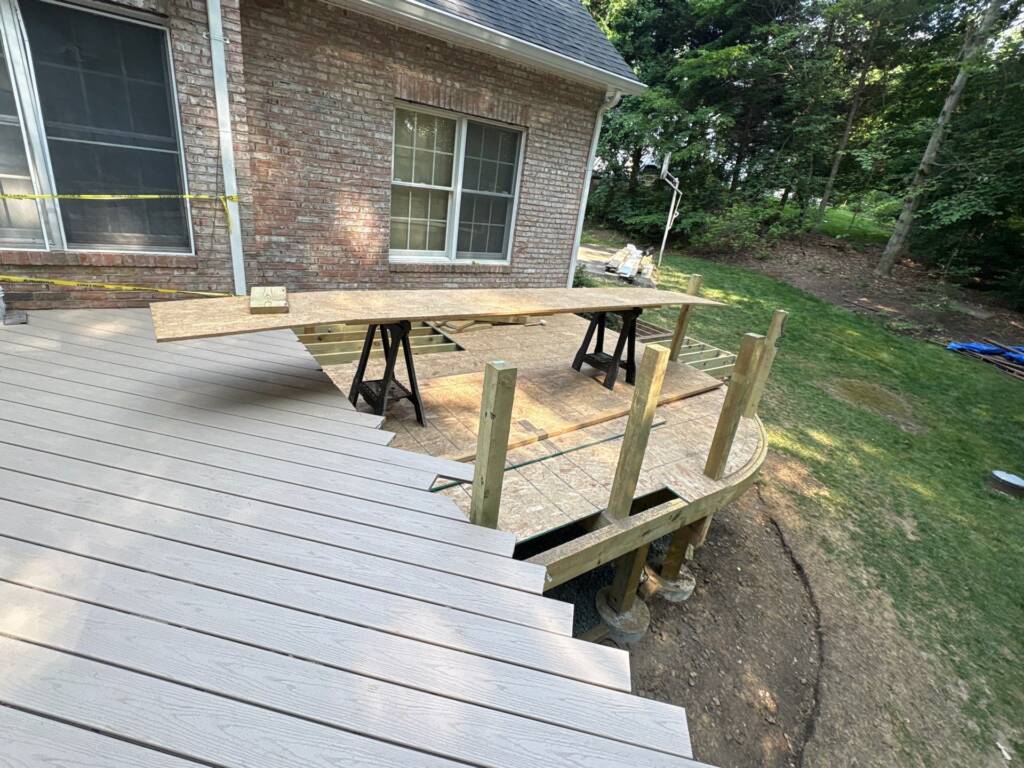
The completed deck installation represents a major transformation of the exterior space, providing a durable, level, and visually cohesive platform. The finished surface integrates seamlessly with the existing structure while enhancing accessibility and outdoor usability.
This phase brought the project closer to completion, delivering a functional and refined exterior area designed for long-term performance and everyday use.
Finished Deck Surface & Final Appearance
This stage presents the fully completed deck surface, showcasing a smooth, uniform finish across the entire platform. Deck boards were installed with consistent spacing and alignment, creating clean lines and a cohesive appearance.
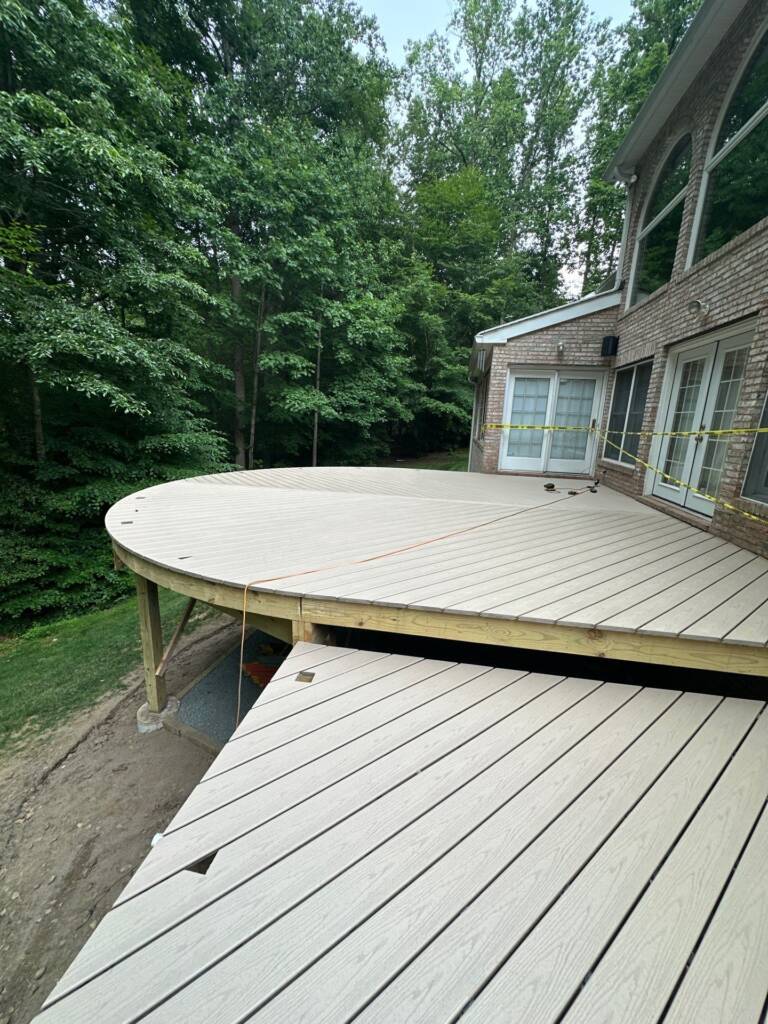
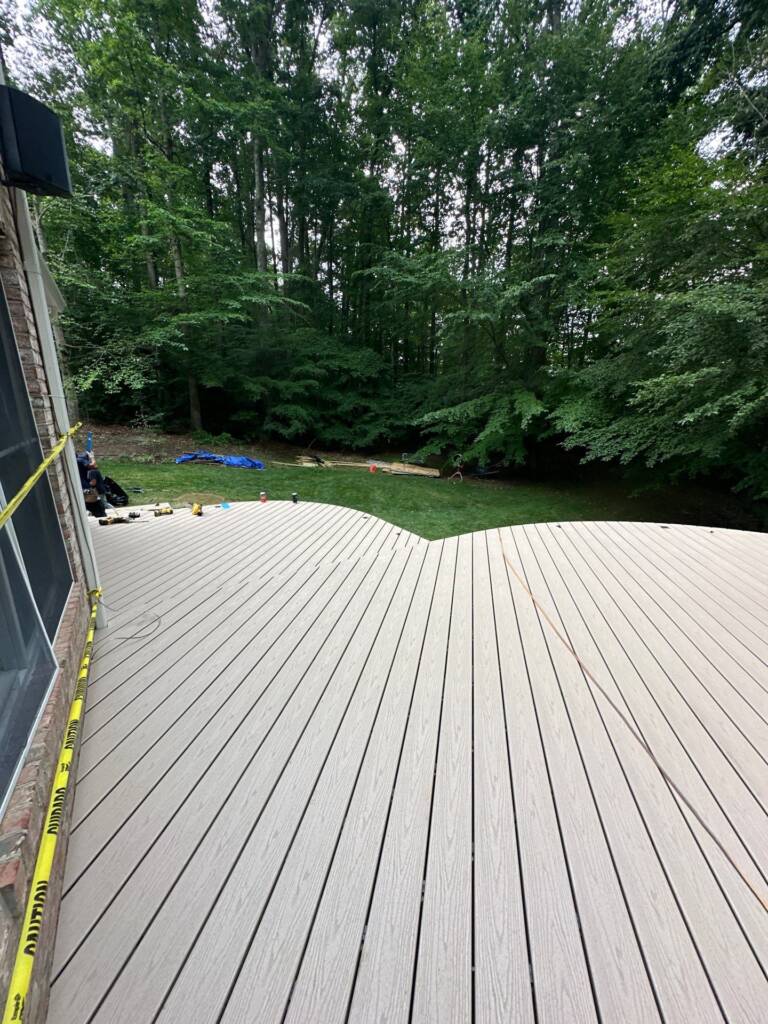
The finished surface integrates seamlessly with the existing structure and surrounding landscape, providing a spacious and functional outdoor area. The curved edges and transitions were carefully executed to enhance flow and visual continuity.
This final result delivers a durable, low-maintenance deck designed for long-term use and everyday enjoyment.
Deck Stair Installation & Access Connection
This phase focused on the installation of deck stairs and access connections, linking the elevated platform to ground level. Stair framing was carefully constructed to ensure proper rise, run, and alignment for safe and comfortable use.
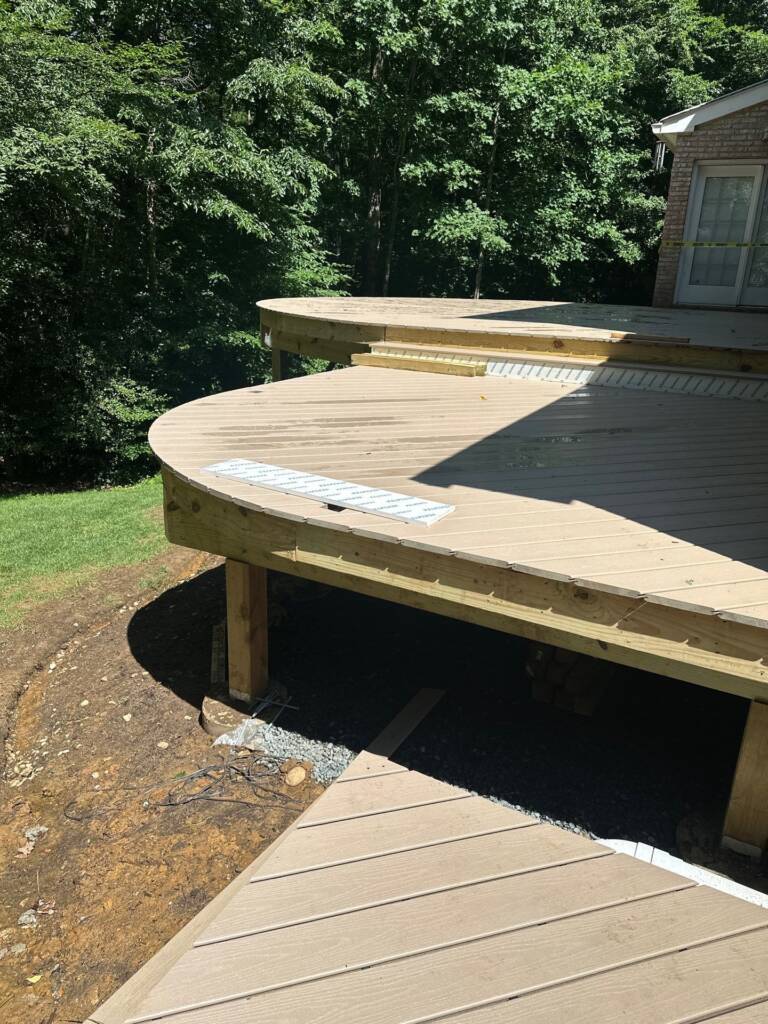
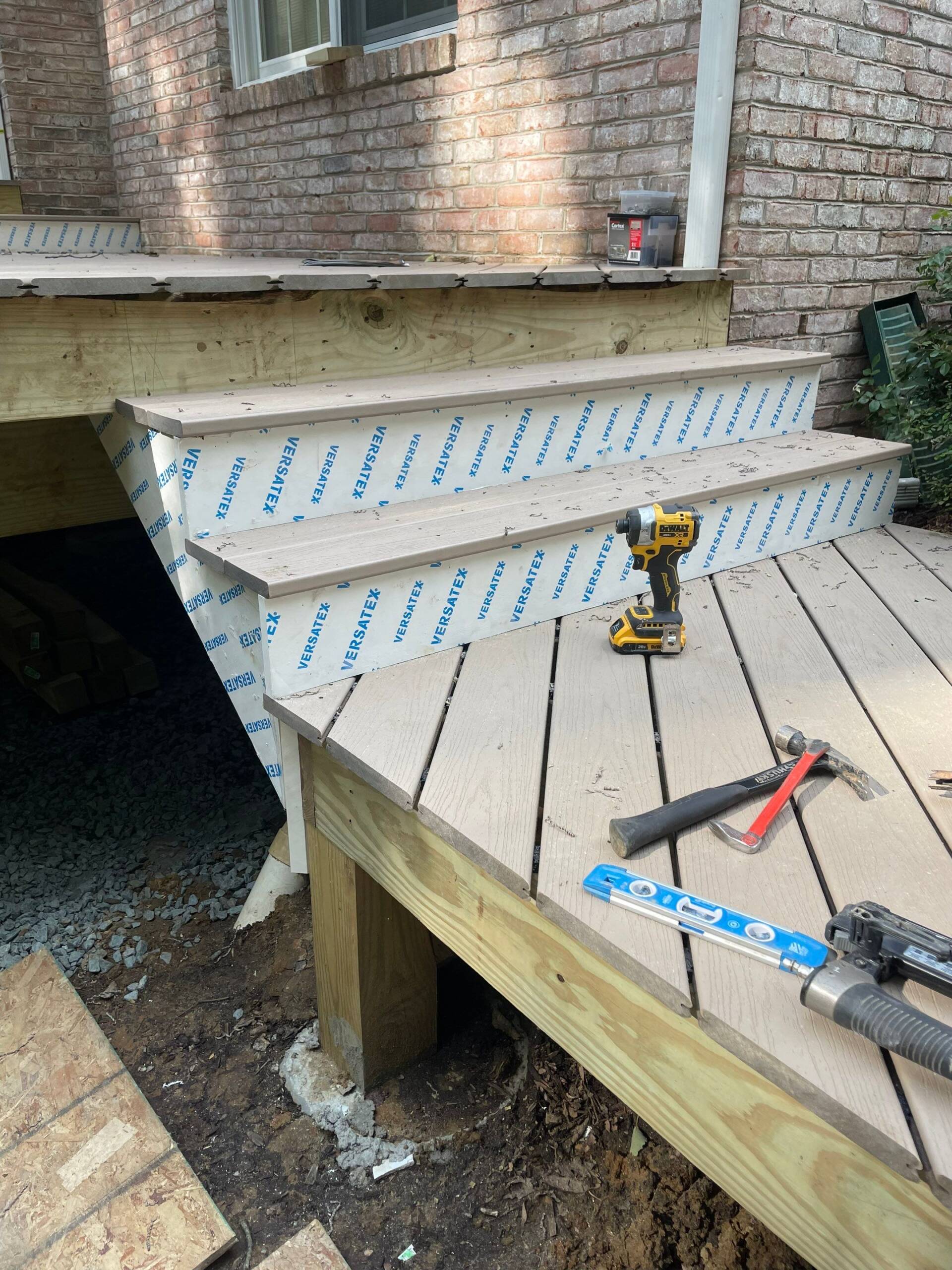
Deck boards and stair components were measured and fitted to maintain consistent spacing and clean transitions between surfaces. Structural supports beneath the stairs were reinforced to provide long-term stability.
This stage completed a critical access point, improving both functionality and circulation within the exterior space.
Additional detailing was performed to ensure smooth edges, secure fastening, and accurate alignment with the main deck structure. Tools and materials were positioned on-site to allow precise installation and finishing.
These improvements ensured the stairs integrated seamlessly with the overall deck design.
Design Phase
The design focused on creating a clear and safe transition between deck levels and the surrounding ground. Stair placement and proportions were planned to support natural movement and visual continuity.
Design decisions emphasized accessibility, safety, and structural balance.
Construction Phase
Construction included stair framing, tread installation, and structural reinforcement. All components were secured to meet safety standards and ensure durability.
This phase finalized the deck access system and completed the connection between elevated and ground-level areas.
Deck Railing Installation & Perimeter Finishing
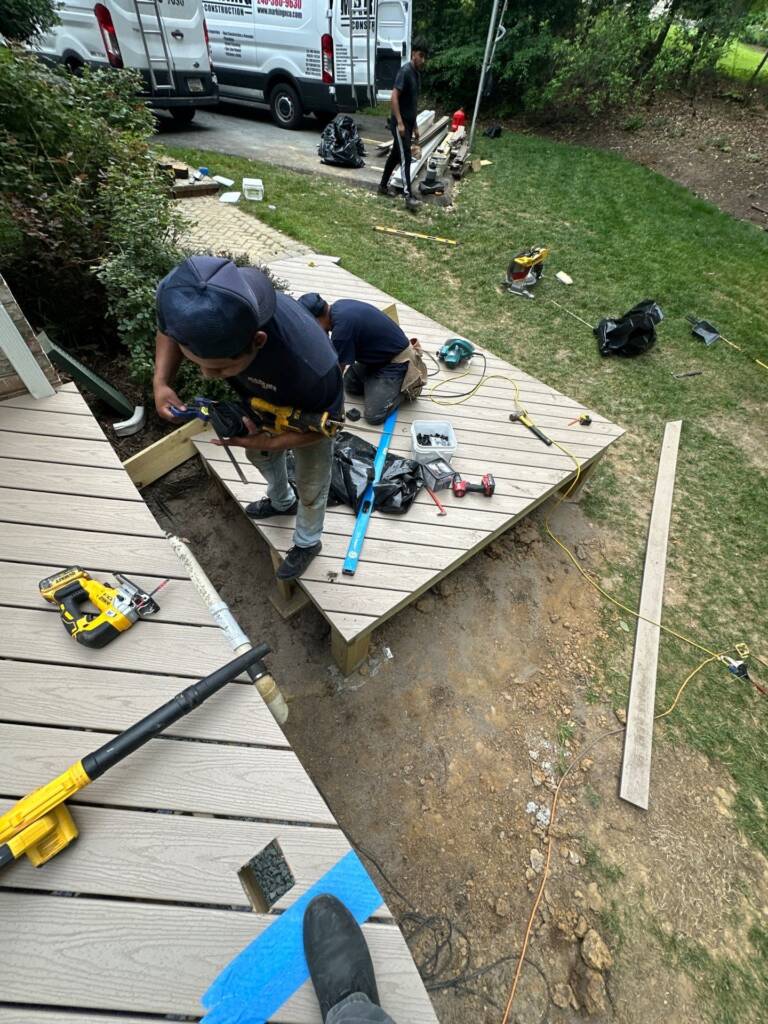
This phase focused on the installation of deck railing posts and perimeter elements, defining the outer boundary of the platform. Vertical posts were carefully positioned and secured to ensure proper spacing, alignment, and structural support for the railing system.
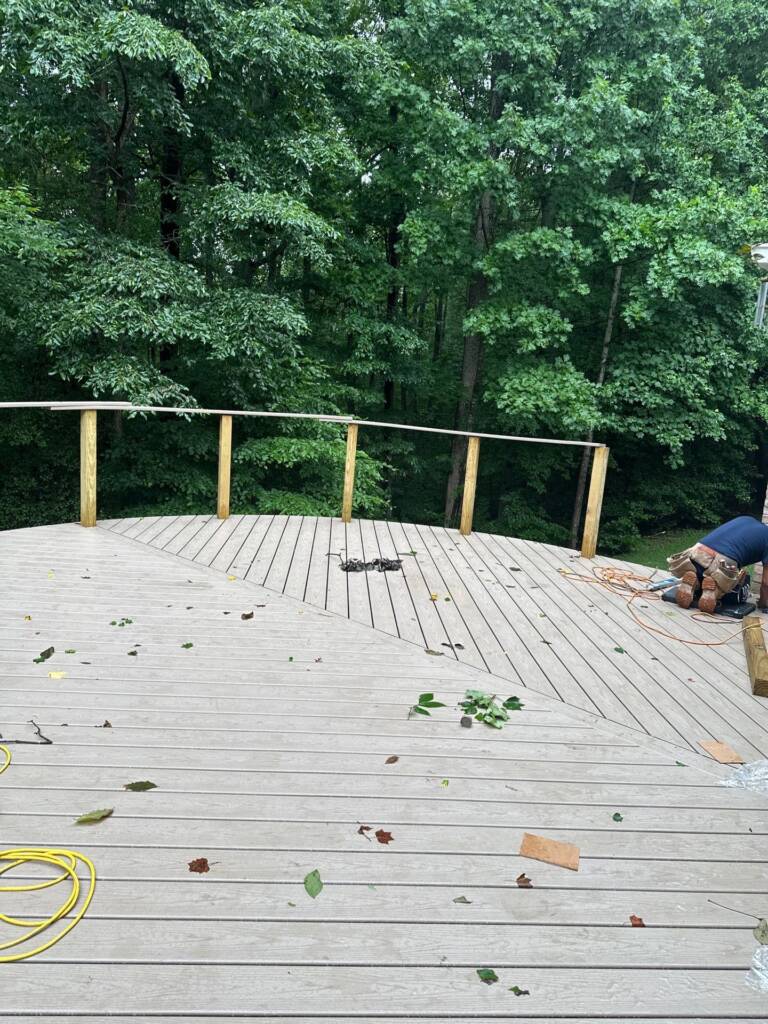
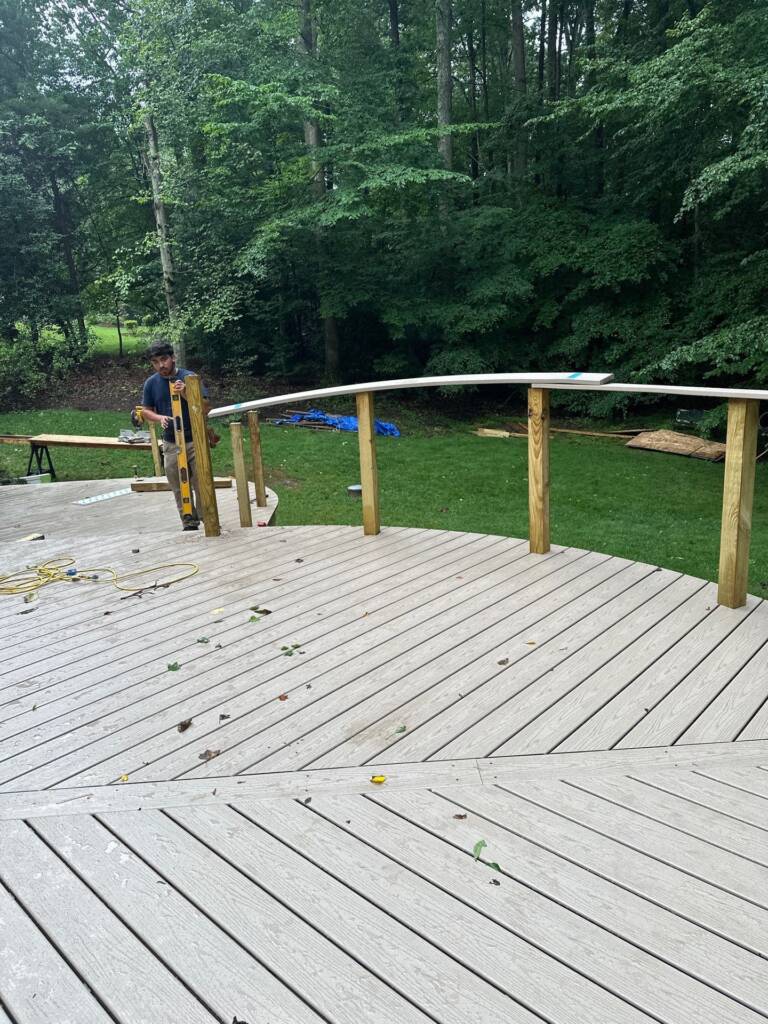
Work progressed along the curved edge of the deck, maintaining consistent geometry and smooth transitions. The perimeter framing reinforced safety while preserving the open view toward the surrounding landscape.
This stage completed the enclosure of the deck surface and prepared the structure for final railing components.
Additional adjustments were made to refine post alignment and ensure uniform height across the perimeter. Materials were staged on-site to support efficient installation and accurate detailing.
These steps brought the deck closer to full completion and everyday usability.
Design Phase
The design approach emphasized safety and visual continuity along the deck perimeter. Post placement and curvature were planned to follow the deck’s shape while maintaining a clean and balanced appearance.
Design decisions focused on openness, proportion, and integration with the exterior environment.
Construction Phase
Construction included railing post installation, perimeter reinforcement, and alignment verification. All components were secured to meet safety standards and ensure long-term durability.
This phase finalized the deck’s boundary structure and completed the primary safety features.
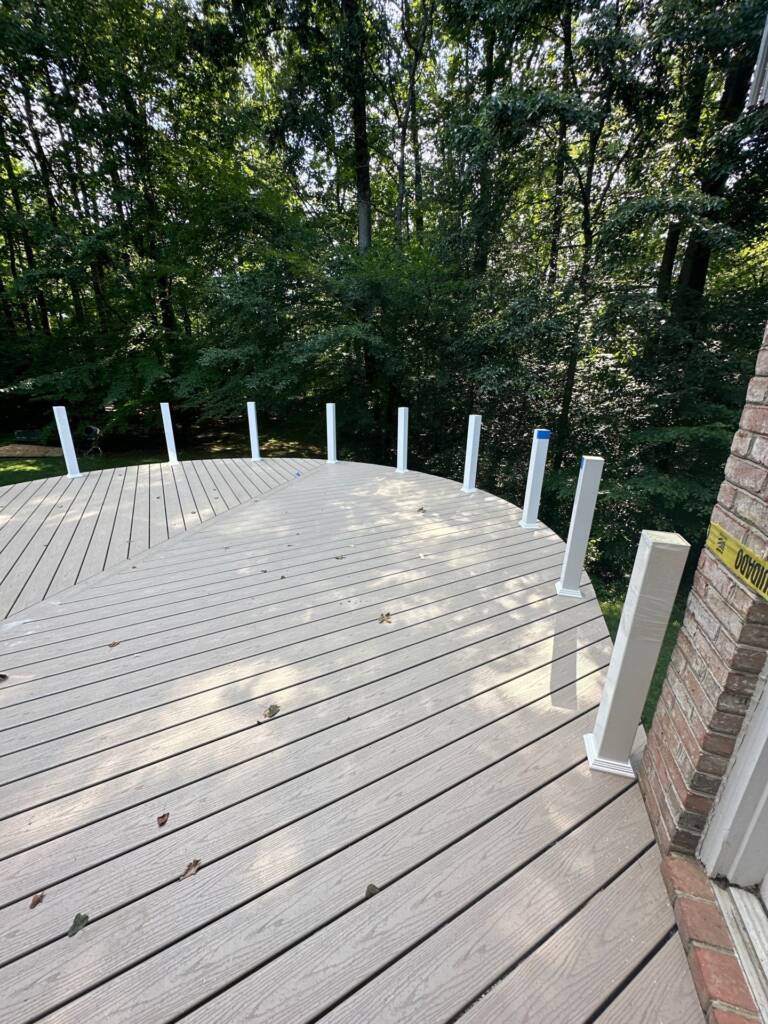
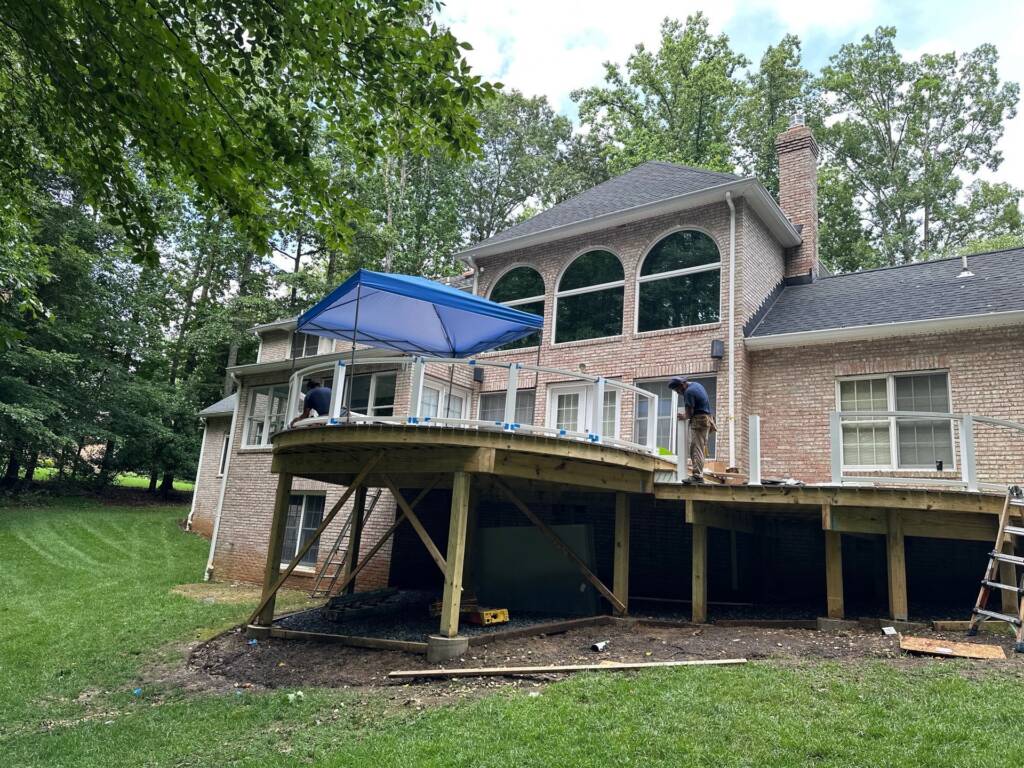
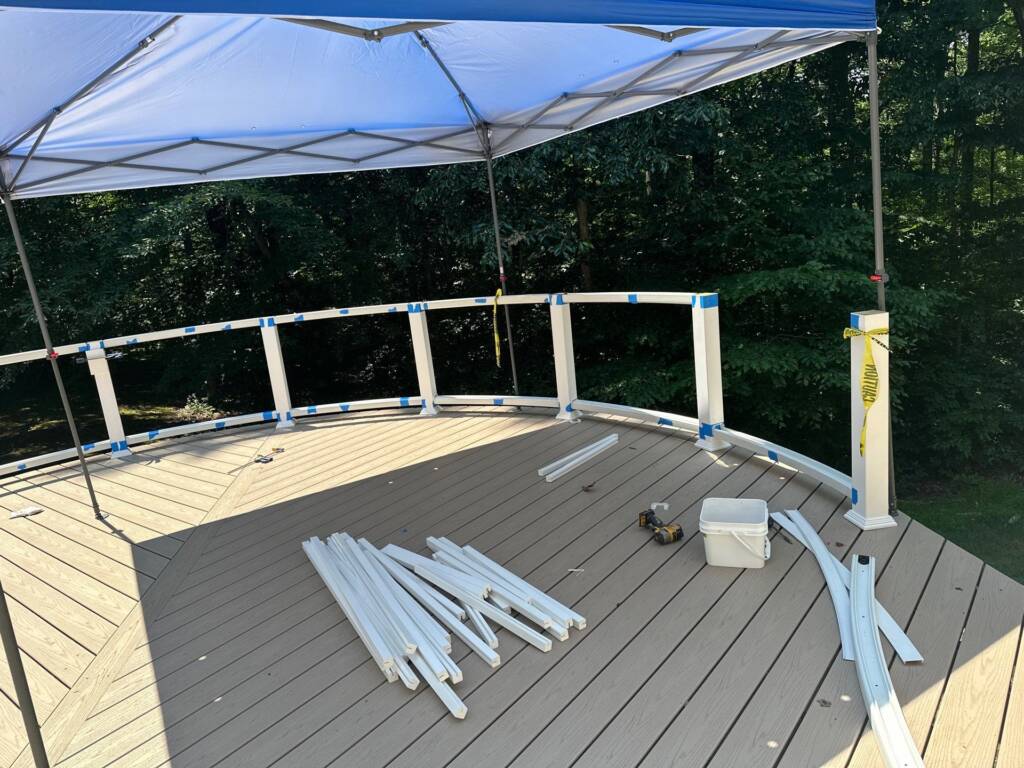
The installation of the deck railing system completed the exterior platform, providing safety, structure, and visual definition. The finished perimeter integrates seamlessly with the deck surface while maintaining open views and a balanced architectural presence.
This final stage marked the completion of the exterior renovation, delivering a durable, functional, and refined outdoor space designed for long-term use.
Railing System Installation & Final Detailing
This phase focused on the installation of the final railing system, completing the safety enclosure of the deck. Railing posts and horizontal components were carefully aligned to follow the curved perimeter of the platform.
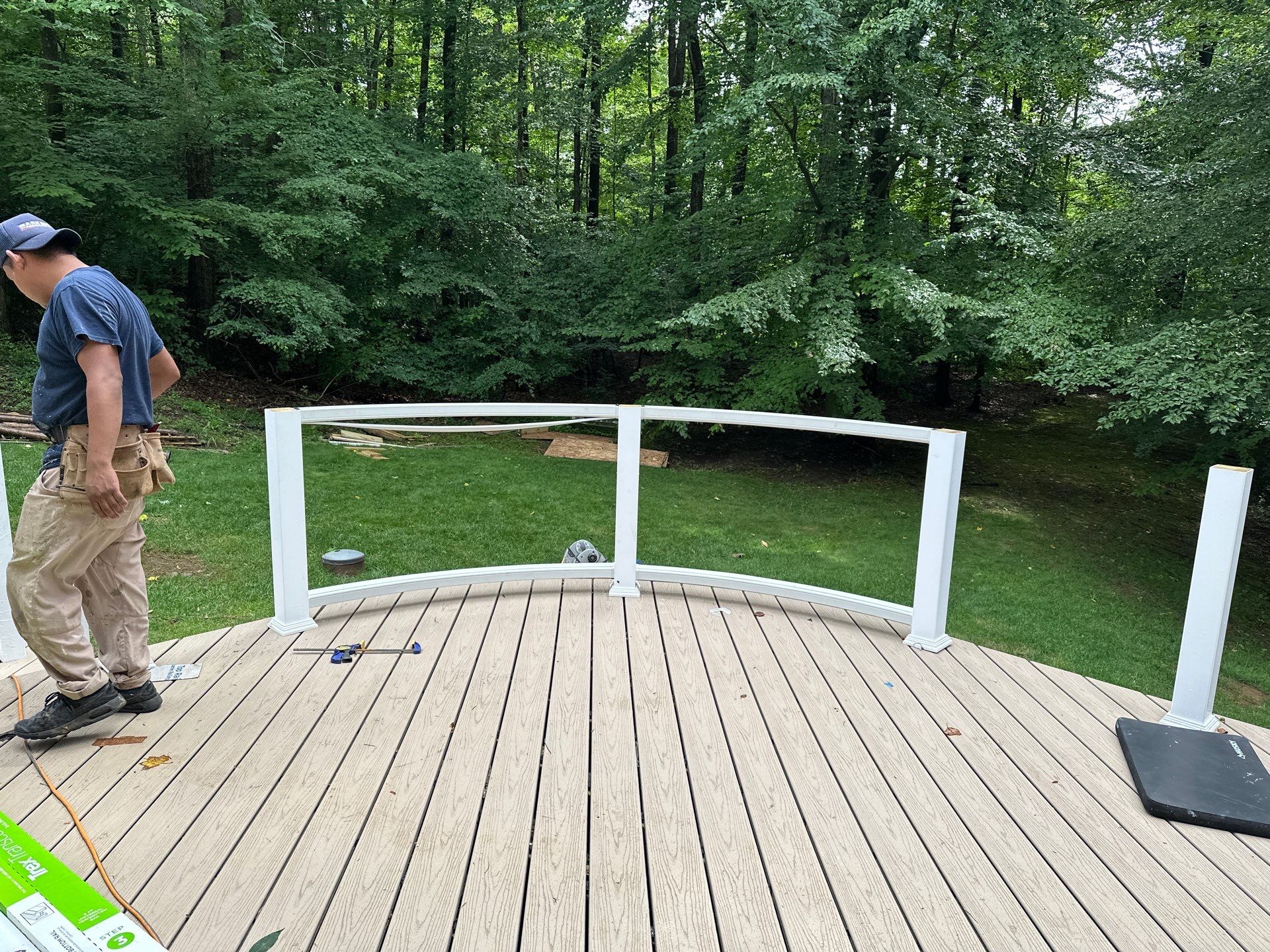
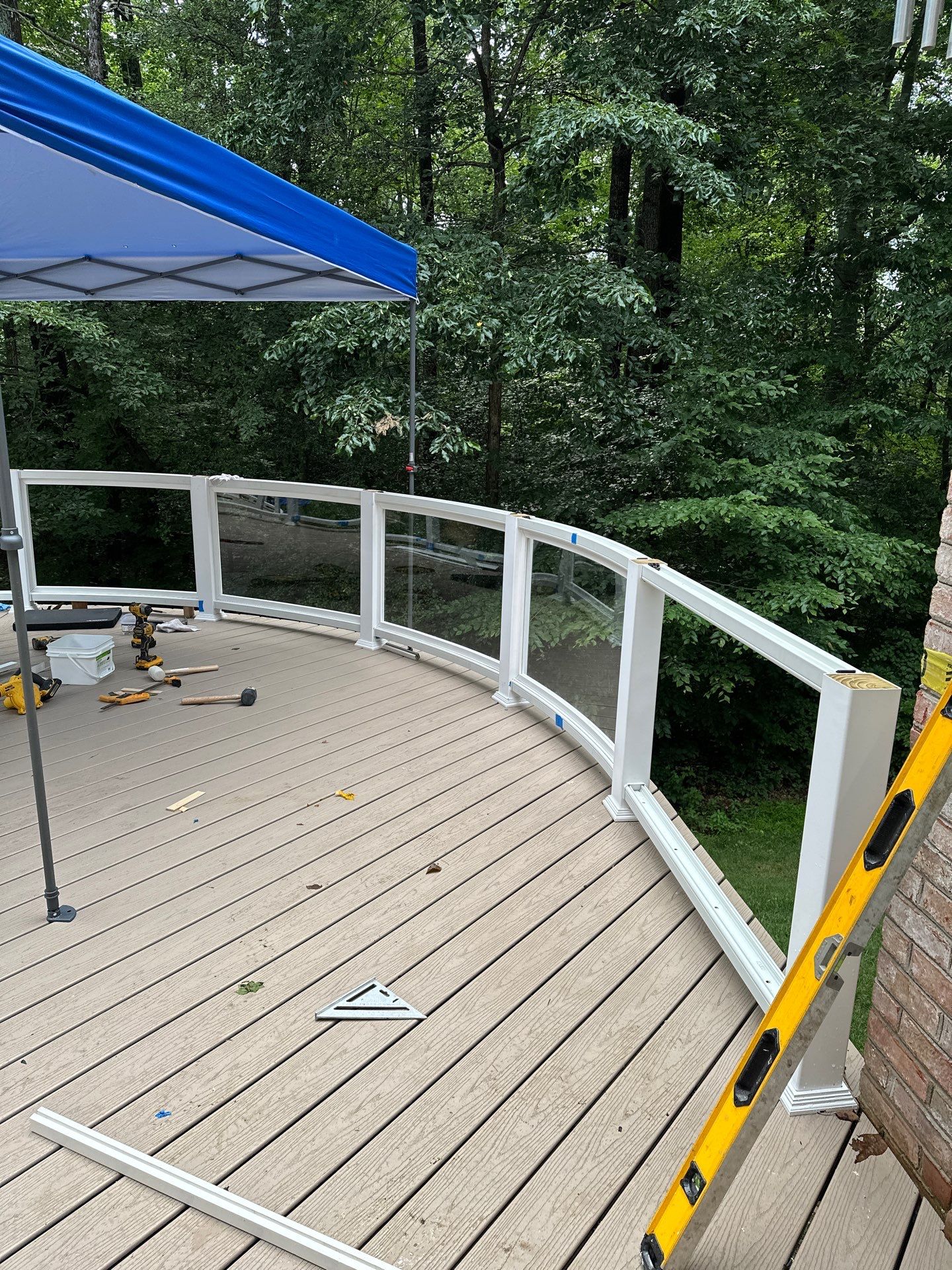
Transparent railing panels were integrated to maintain visibility while providing a secure barrier. All components were measured and adjusted to ensure uniform spacing, clean lines, and proper alignment.
This stage finalized the deck’s perimeter, combining safety, durability, and a refined visual finish.
Additional detailing was performed to secure connections, refine joints, and prepare the railing system for long-term use. Tools and materials were staged on-site to ensure precision during installation.
These final adjustments ensured a consistent and professional finish across the entire deck.
Design Phase
The design approach emphasized openness and visual continuity, using transparent panels to preserve views of the surrounding landscape. Curved sections were carefully planned to complement the deck’s geometry.
Design decisions focused on safety, aesthetics, and seamless integration with the outdoor environment.
Construction Phase
Construction included railing assembly, panel installation, and final alignment. All elements were secured to meet safety standards and structural requirements.
This phase completed the installation of the deck’s protective railing system.
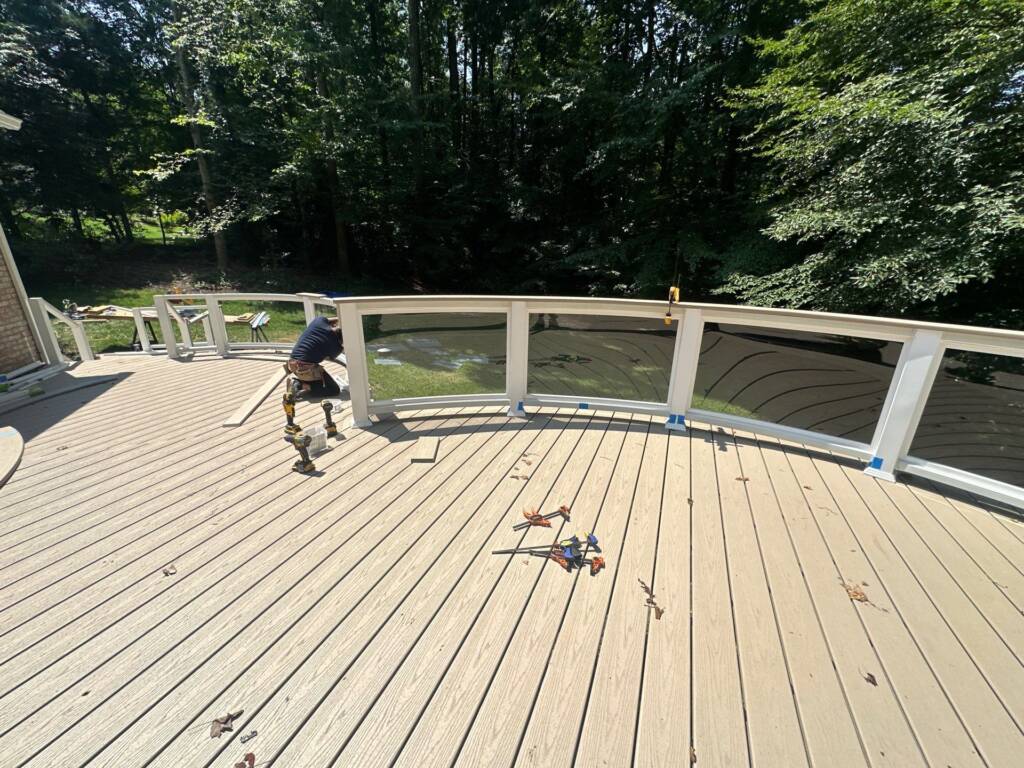
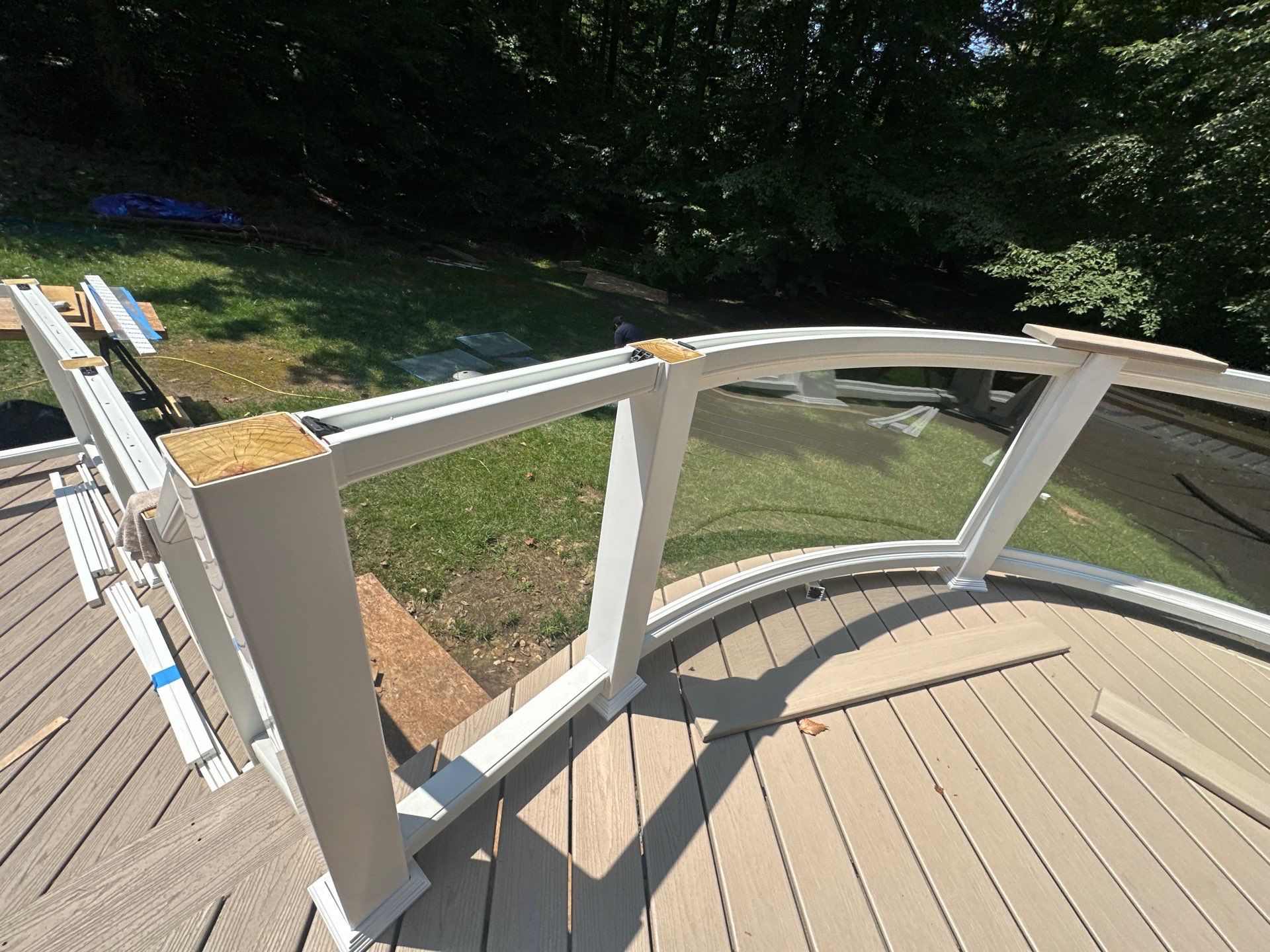
The completed railing system enhances both safety and visual appeal, defining the deck’s perimeter without obstructing views. This final element brought the exterior project to full completion, delivering a polished, functional, and well-integrated outdoor space.
Completed Deck & Final Exterior View
This section showcases the fully completed deck, highlighting the finished surface and installed railing system. The uniform decking boards and smooth curvature create a cohesive and polished outdoor platform.
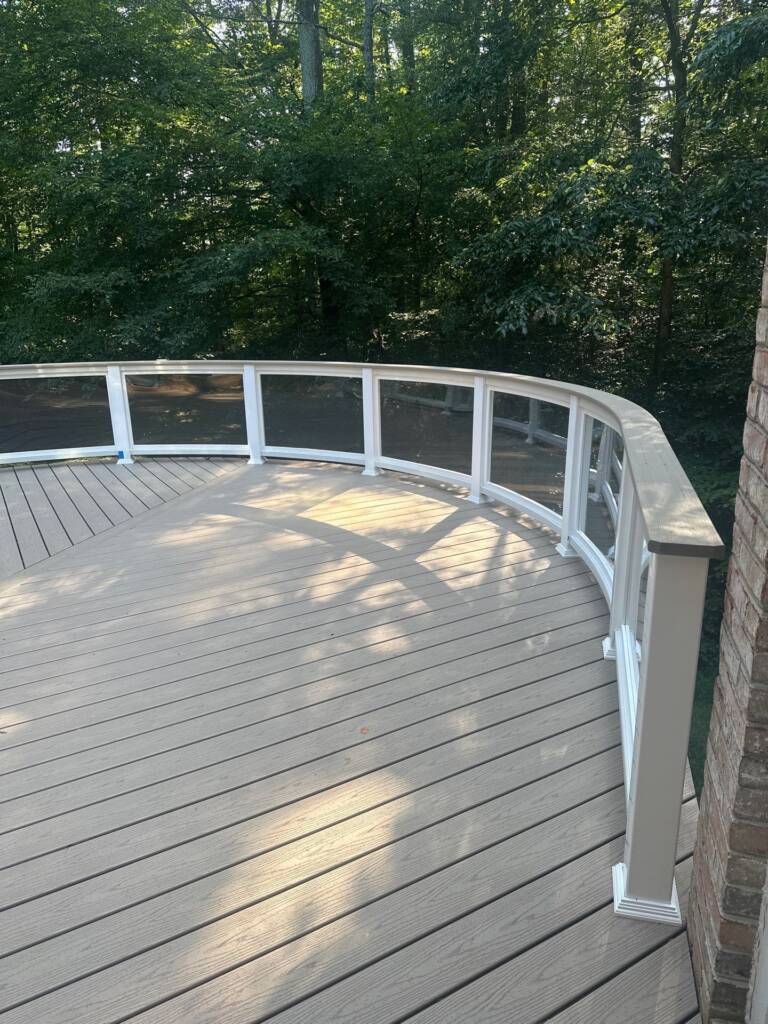
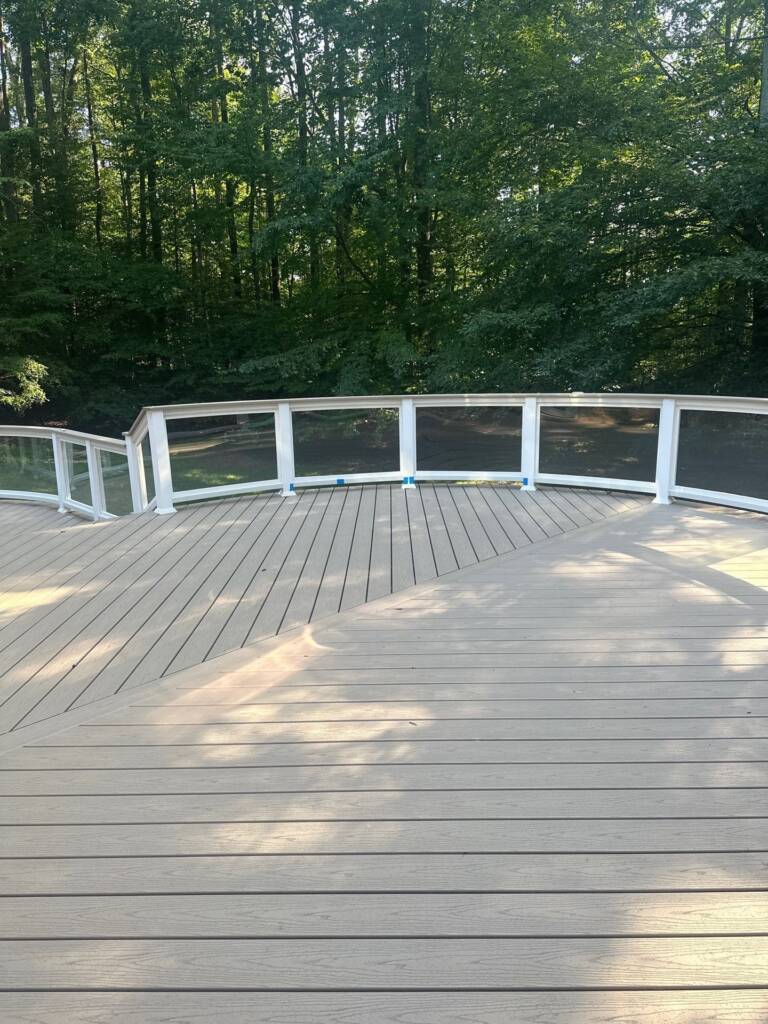
The railing system provides safety while maintaining open views toward the surrounding wooded landscape. Clean lines, consistent spacing, and refined detailing define the final appearance of the exterior space.
This completed view reflects the successful transformation of the outdoor area into a durable, functional, and visually balanced extension of the home.
Elevated Deck Structure & Full Exterior Integration
This stage highlights the fully assembled elevated deck structure, showing the integration of the platform with the existing home. Structural supports, columns, and framing beneath the deck were completed to ensure stability and long-term performance.
The elevated design allows for open circulation below the deck while maintaining a strong visual connection between the upper platform and the surrounding landscape. Structural elements were aligned to support both the deck surface and railing system above.
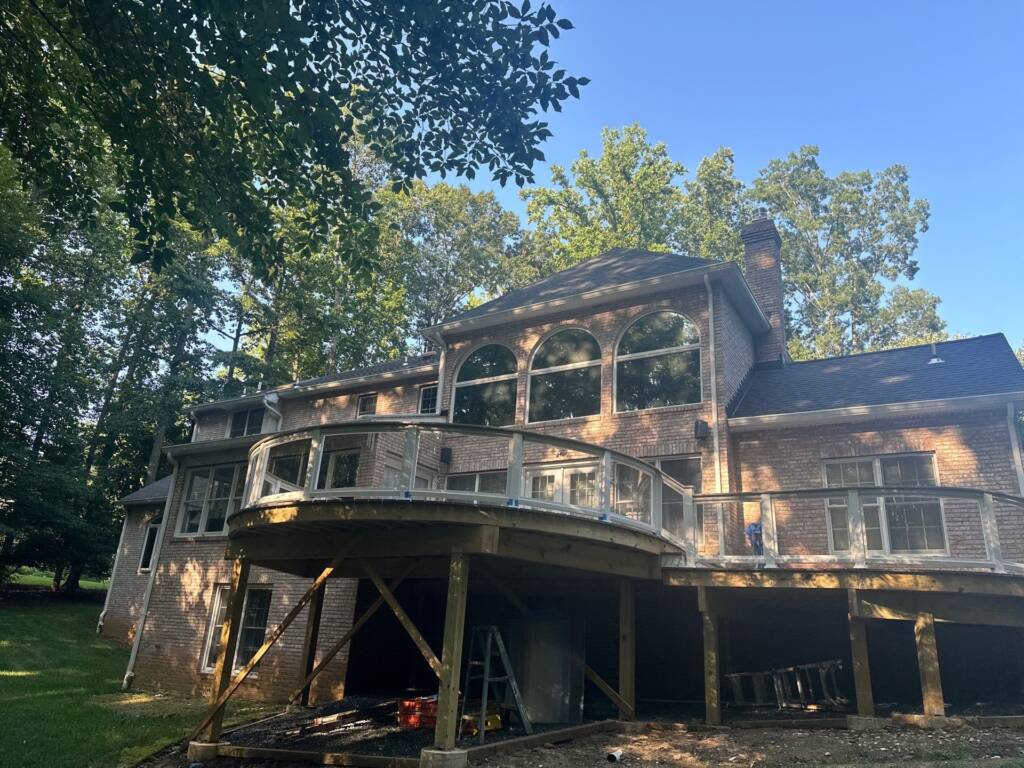
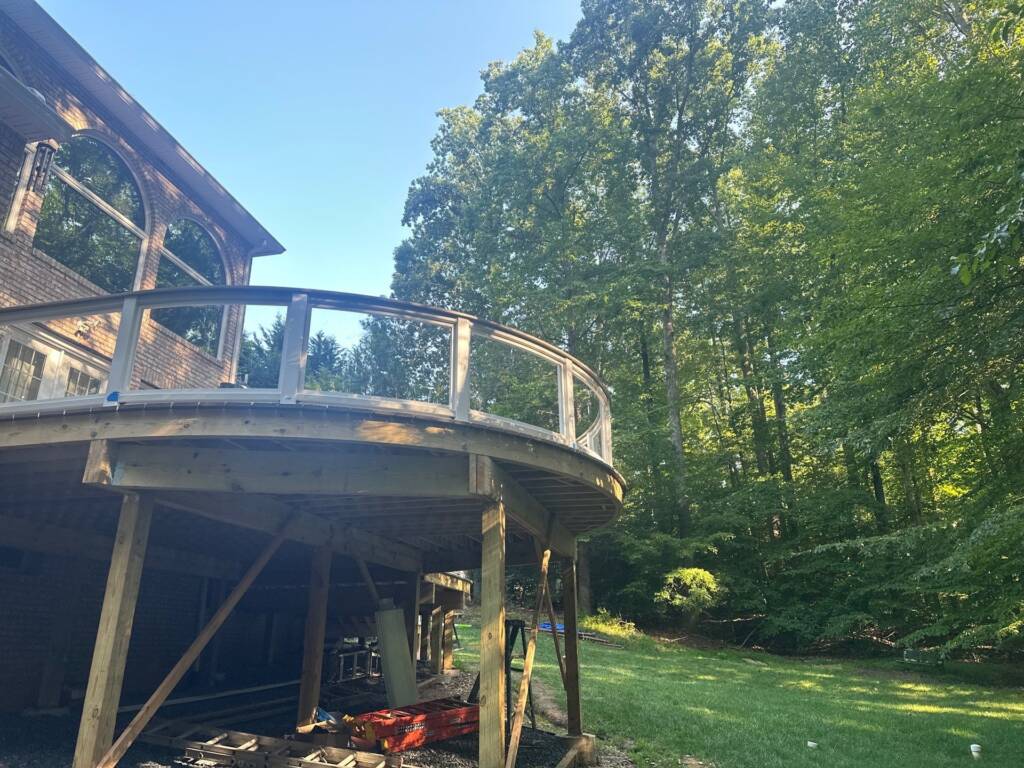
This phase represents a major milestone, where the exterior structure becomes fully defined and visually cohesive.
Additional work focused on refining the support system, adjusting column alignment, and preparing the area beneath the deck for drainage and ground finishing. These steps reinforced both structural integrity and overall appearance.
The completed framework establishes a durable foundation for everyday use and environmental exposure.
Design Phase
The design approach emphasized structural balance and architectural continuity. Column placement and elevation were planned to support the curved deck layout while maintaining openness and visual flow beneath the structure.
Design decisions focused on strength, proportion, and seamless integration with the existing building.
Construction Phase
Construction included installation of vertical supports, beam connections, and underdeck framing. All elements were secured and reinforced to meet safety and load requirements.
This phase finalized the structural system supporting the elevated deck.
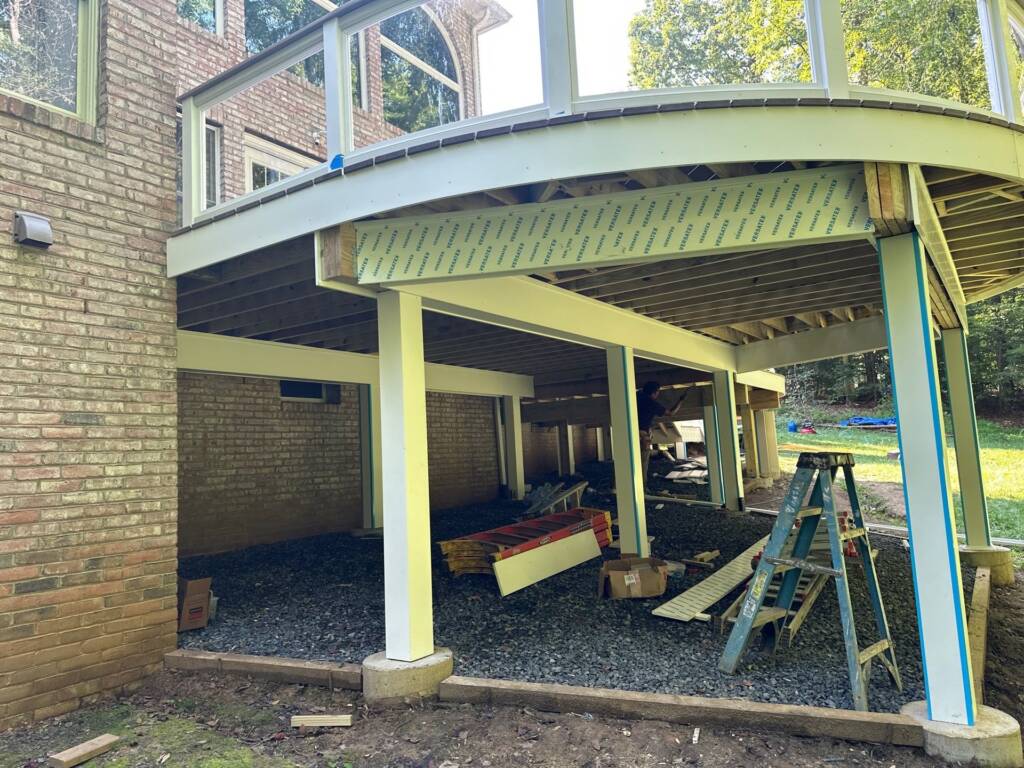
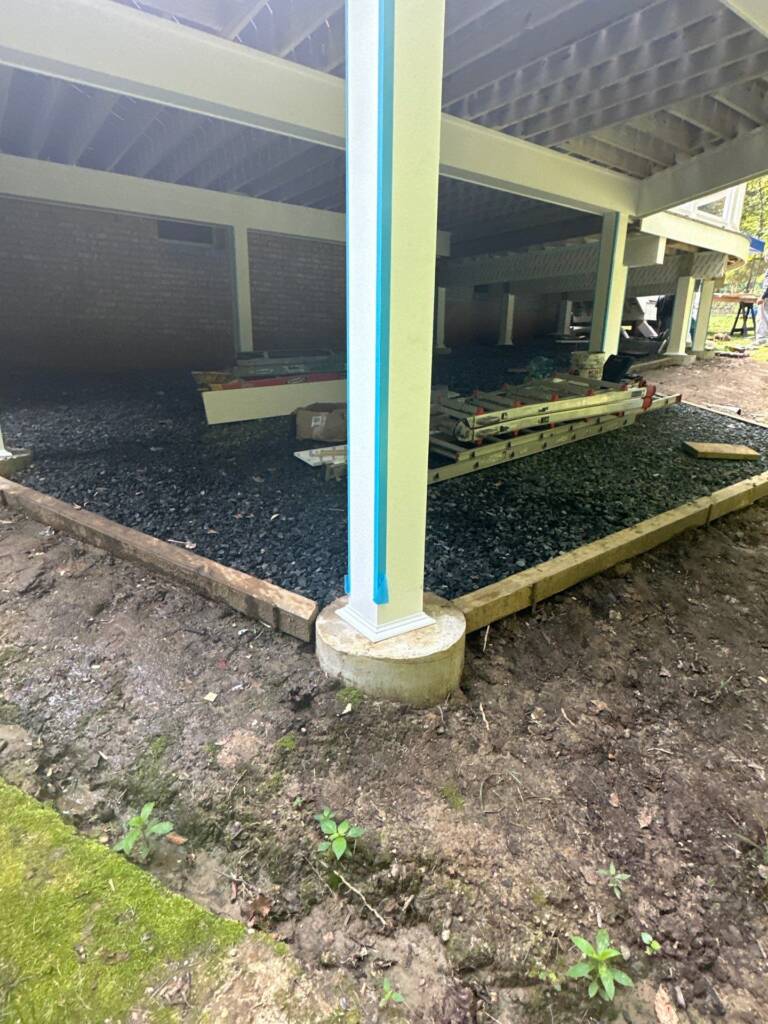
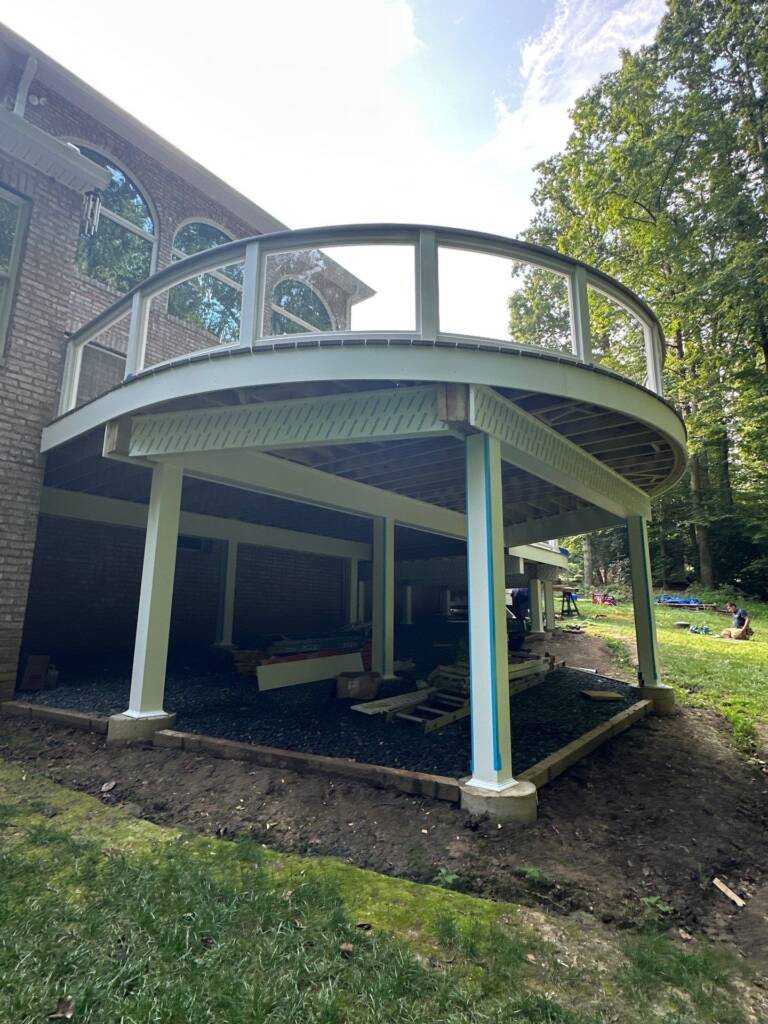
The completed elevated structure unifies the deck with the home’s exterior, delivering a strong, functional, and visually refined outdoor extension. This stage brought the project to a near-final state, showcasing both craftsmanship and structural precision.
Final Deck Completion & Exterior Integration
This section presents the fully completed deck, showing the finished structure elevated above the landscape and seamlessly integrated with the home’s exterior. The deck surface, railing system, and support columns work together to create a stable and visually balanced outdoor space.
The curved deck layout enhances circulation and maximizes usable area while maintaining open views of the surrounding natural environment. Clean finishes and consistent detailing define the final appearance of the structure.
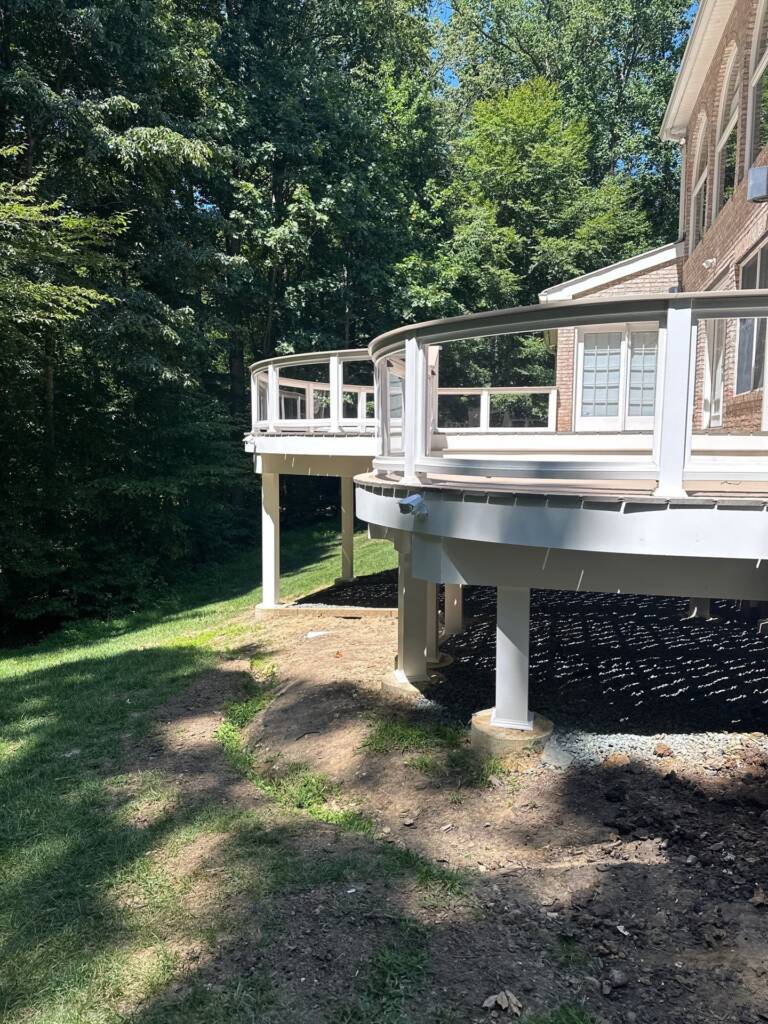
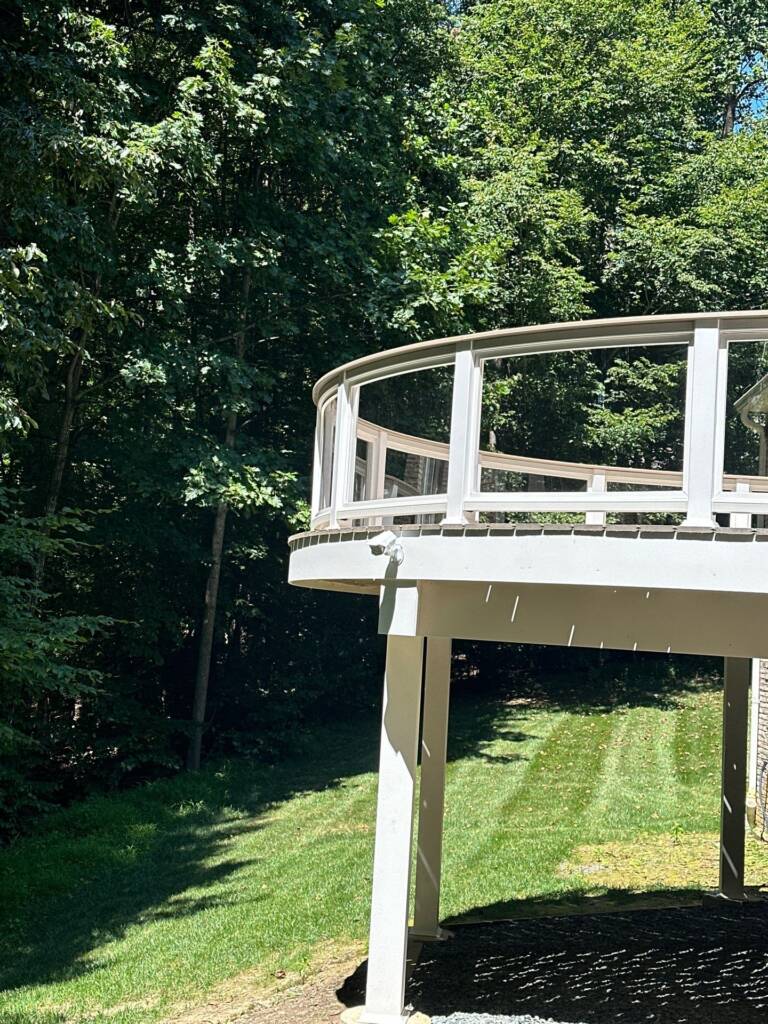
This stage reflects the completion of the exterior transformation, delivering a functional and refined outdoor living area.
Final adjustments were made to ensure proper alignment, surface continuity, and secure connections throughout the deck. The area beneath the structure was stabilized to support long-term durability and drainage.
These finishing steps reinforced both performance and visual cohesion.
Design Phase
The design approach focused on blending the deck seamlessly with the existing architecture and landscape. Curved railings, balanced proportions, and open sightlines were used to create a harmonious exterior extension.
Design decisions emphasized comfort, flow, and long-term usability.
Construction Phase
Construction included final surface installation, railing completion, column finishing, and structural verification. All components were secured to meet safety standards and performance requirements.
This phase marked the full completion of the deck structure.
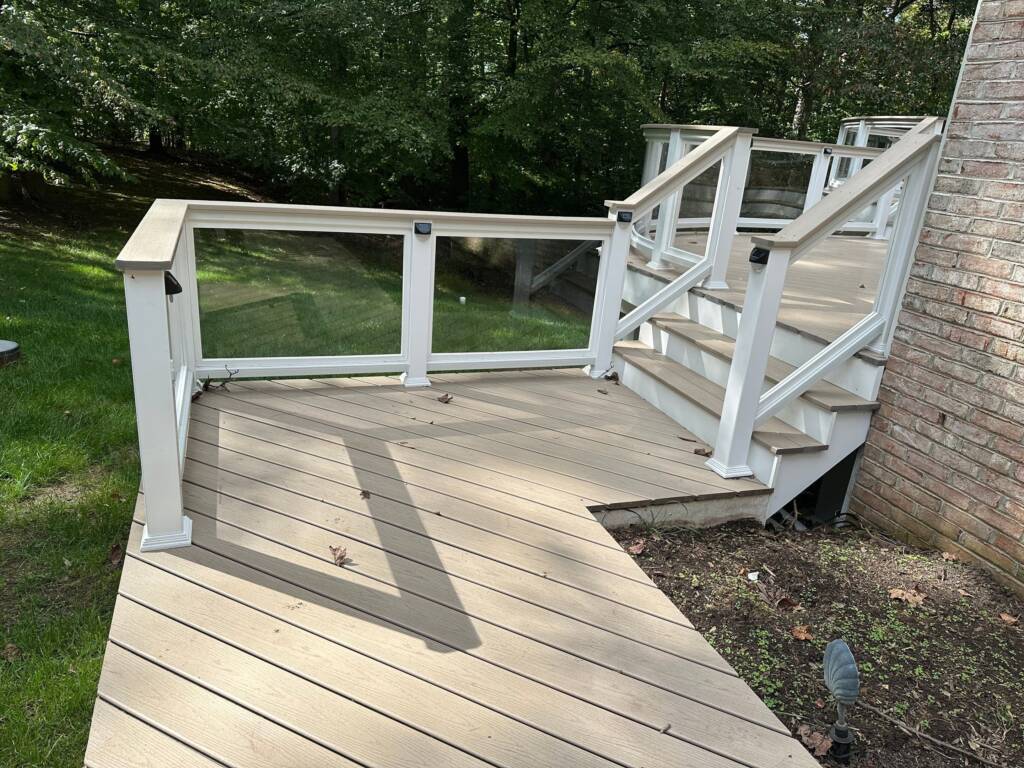
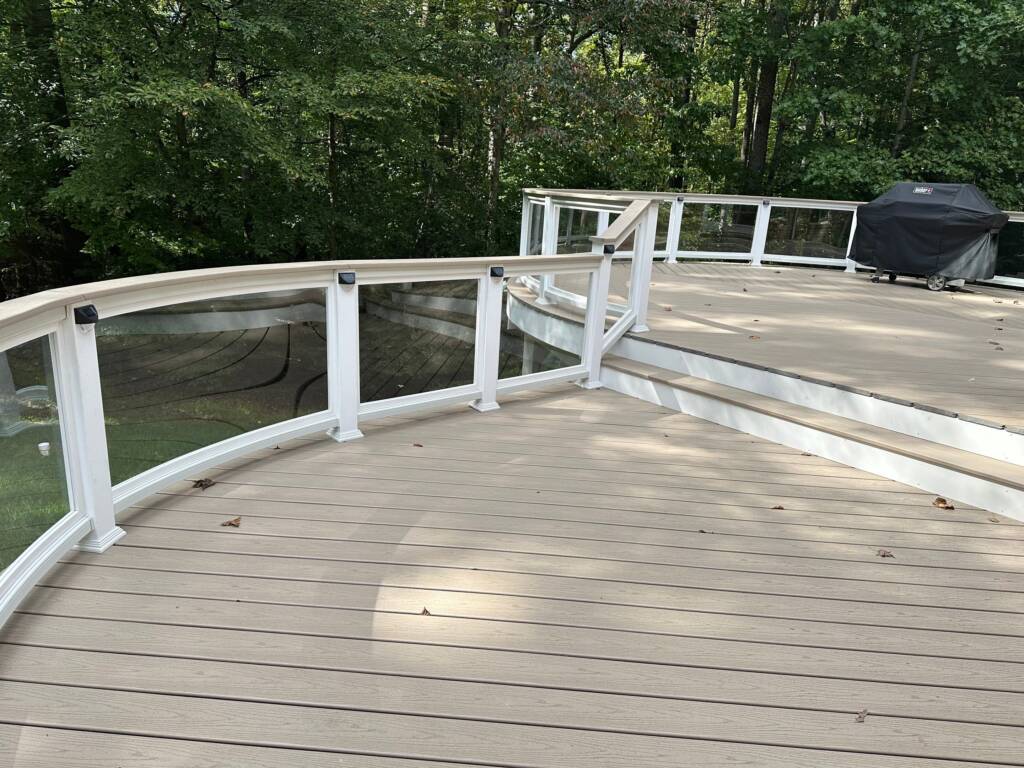
The completed deck enhances the home’s exterior by providing a durable, accessible, and visually striking outdoor space. This final phase brought the project to completion, delivering a polished result designed for everyday use and lasting enjoyment.
Final Exterior View & Project Completion
This final section presents the completed exterior view of the property, highlighting the finished surroundings and restored functionality of the space. The driveway, garage access, and adjacent landscaping appear clean, organized, and fully integrated with the home’s architecture.
The completed exterior reflects the full scope of work, showing how structural restoration and exterior improvements come together to deliver a cohesive and functional result.
This closing view reinforces the project’s successful completion, showcasing a safe, durable, and visually balanced property ready for everyday use.
Learn more about our professional construction and renovation services to see how we approach complex exterior projects with the same focus on quality, safety, and long-term performance.
